
Water flow meter is an instrument used to measure the flow rate of water in a pipe or system. It is commonly used in various industries such as water treatment, irrigation, and plumbing, to monitor and control the amount of water being utilized.
A water flow meter typically consists of a sensor, a transmitter, and a display unit. The sensor is placed in the water flow path and measures the velocity of the water, which is then converted into an electrical signal. The transmitter then amplifies and transmits this signal to the display unit, where it is converted into a readable flow rate value.
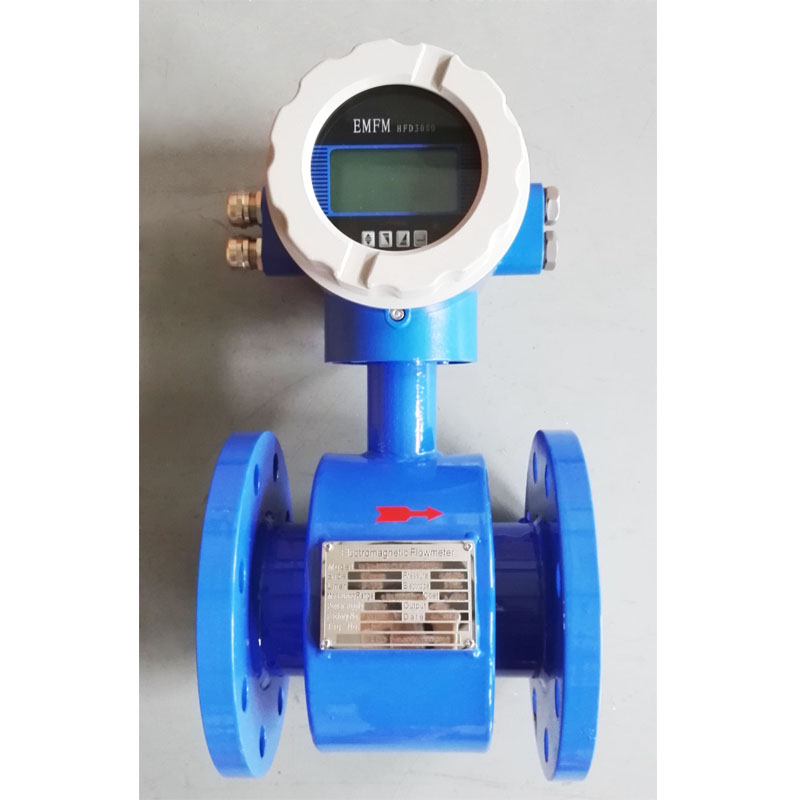
Different types of water flow meters are available, such as electromagnetic, ultrasonic, and turbine. Each type has its own advantages and is suitable for different applications. For instance, electromagnetic flow meters are ideal for measuring clean water flow, while ultrasonic flow meters are suitable for dirty water or slurry applications.
Water flow meters are essential for monitoring water usage and ensuring efficient and optimal operation of systems. They can also help identify potential leaks or problems in the water distribution system, saving both water and money.

Pengukur aliran kami yang hemat biaya adalah solusi sempurna untuk manajemen cairan yang efisien. Dengan pengukuran yang akurat dan andal, alat ini memungkinkan Anda memantau dan mengontrol aliran cairan dalam sistem Anda dengan mudah. Hal ini tidak hanya memaksimalkan produktivitas, tetapi juga mengurangi biaya energi dan pemeliharaan. Antarmuka yang mudah digunakan dan pemasangan yang sederhana menjadikannya sebagai tambahan yang tidak merepotkan untuk sistem Anda. Pilih flow-meter kami dan rasakan pengalaman manajemen cairan yang mulus dan hemat biaya.
Our company is proud to introduce our latest product – an innovative non-intrusive flow-meter that is revolutionizing the industry. Unlike traditional flow-meters that require complicated and time-consuming installation processes, our non-intrusive flow-meter is incredibly easy to install. This is made possible by its non-intrusive design, which eliminates the need for cutting into pipelines or interrupting operations. The result is a seamless and hassle-free installation experience. Our flow-meter also boasts high accuracy and precision, ensuring reliable and accurate flow measurements without any disruption to your operations. With our non-intrusive flow-meter, we are changing the game and setting a new standard for ease of installation and functionality.

Pengukur aliran air adalah alat ukur yang digunakan untuk mengukur pergerakan air melalui pipa atau sistem. Perangkat ini memainkan peran penting dalam berbagai industri termasuk pengolahan air, irigasi, dan utilitas. Dengan mengukur volume atau laju aliran air secara akurat, alat ini membantu dalam memantau dan mengontrol penggunaan dan distribusi air. Dengan kemajuan teknologi yang berkelanjutan, pengukur aliran air telah berevolusi dari perangkat mekanis tradisional menjadi pengukur elektronik dan digital modern, memberikan pengukuran yang lebih tepat dan andal. Dalam laporan ini, kami akan membahas berbagai jenis pengukur aliran air dan aplikasinya, serta manfaat yang mereka tawarkan untuk pengelolaan air yang efisien.
2.Can a water flow meter measure both volume and flow rate?
3.What is the recommended installation location for a water flow meter?
4.Are there different types of water flow meters available in the market?
5.Do water flow meters require regular maintenance?
6.Can a water flow meter be used for industrial and residential purposes?
7.What types of materials are used to make water flow meters?
8.How does a water flow meter help with water conservation efforts?
9.What are the benefits of using a wireless water flow meter?
10.What are the main components of a water flow meter?
1.How does a digital water flow meter differ from a mechanical one?
A digital water flow meter uses electronic sensors and a digital display to measure and display the flow rate of water, while a mechanical water flow meter uses mechanical components such as gears and turbines to measure and display the flow rate.
Some key differences between the two types of meters include:
1. Accuracy: Digital water flow meters are generally more accurate than mechanical ones. This is because they use electronic sensors that can measure flow rate more precisely, while mechanical meters may be affected by wear and tear over time.
2. Display: Digital water flow meters have a digital display that shows the flow rate in real-time, while mechanical meters typically have a dial or counter that needs to be read manually.
3. Ease of use: Digital water flow meters are easier to use as they require minimal maintenance and do not need to be calibrated regularly like mechanical meters.
4. Data recording: Digital water flow meters can record and store data, allowing for easier tracking and analysis of water usage over time. Mechanical meters do not have this capability.
5. Cost: Digital water flow meters are generally more expensive than mechanical ones due to their advanced technology and features.
6. Compatibility: Digital water flow meters can be integrated with other digital systems and devices, such as smart home systems or water management software, while mechanical meters cannot.
Overall, digital water flow meters offer more advanced features and capabilities compared to mechanical meters, making them a more popular choice for modern water management systems.
2.Can a water flow meter measure both volume and flow rate?
Ya, pengukur aliran air dapat mengukur volume dan laju aliran. Volume adalah jumlah total air yang telah melewati meteran, sedangkan laju aliran adalah kecepatan air mengalir melalui meteran. Beberapa pengukur aliran air memiliki kemampuan untuk menampilkan volume dan laju aliran secara bersamaan, sementara yang lain mungkin memerlukan perhitungan manual untuk menentukan salah satunya.

3.What is the recommended installation location for a water flow meter?
The recommended installation location for a water flow meter is typically on the main water supply line, after the water meter and before any branches or splits in the line. This allows for accurate measurement of the total water flow entering a building or property. It is also important to ensure that the flow meter is easily accessible for maintenance and reading.
4.Are there different types of water flow meters available in the market?
Yes, there are several types of water flow meters available in the market, including:
1. Mechanical flow meters: These meters use mechanical components such as gears, pistons, or turbines to measure the flow of water.
2. Ultrasonic flow meters: These meters use ultrasonic waves to measure the velocity of water flow.
3. Magnetic flow meters: These meters use a magnetic field to measure the flow of conductive liquids such as water.
4. Vortex flow meters: These meters use the principle of vortex shedding to measure the flow of water.
5. Differential pressure flow meters: These meters measure the pressure difference across an obstruction in the flow of water.
6. Turbine flow meters: These meters use a turbine to measure the flow of water.
7. Coriolis flow meters: These meters use the Coriolis effect to measure the mass flow rate of water.
8. Positive displacement flow meters: These meters measure the volume of water passing through by counting the number of times a chamber is filled and emptied.
9. Electromagnetic flow meters: These meters use Faraday’s law of electromagnetic induction to measure the flow of conductive liquids such as water.
10. Thermal mass flow meters: These meters measure the mass flow rate of water by using the heat transfer principle.
11. Open channel flow meters: These meters are used to measure the flow of water in open channels such as rivers, canals, and streams.
12. Insertion flow meters: These meters are inserted into a pipe to measure the flow of water.
13. Clamp-on flow meters: These meters use ultrasonic waves to measure the flow of water without the need for cutting into the pipe.
14. Smart flow meters: These meters use advanced technology such as wireless communication and data logging to provide real-time flow data.

5.Do water flow meters require regular maintenance?
Ya, pengukur aliran air memerlukan perawatan rutin untuk memastikan pembacaan yang akurat dan berfungsi dengan baik. Hal ini dapat mencakup pembersihan, kalibrasi, dan penggantian komponen yang aus atau rusak. Frekuensi perawatan akan tergantung pada jenis pengukur aliran dan kondisi penggunaannya. Disarankan untuk mengikuti panduan produsen untuk pemeliharaan dan menjadwalkan inspeksi rutin oleh profesional terlatih.
6.Can a water flow meter be used for industrial and residential purposes?
Ya, pengukur aliran air dapat digunakan untuk keperluan industri dan perumahan. Dalam pengaturan industri, pengukur aliran air biasanya digunakan untuk mengukur laju aliran air dalam berbagai proses dan sistem, seperti sistem pendingin, ketel uap, dan sistem irigasi. Dalam pengaturan perumahan, pengukur aliran air digunakan untuk mengukur jumlah air yang digunakan oleh rumah tangga untuk tujuan penagihan dan untuk mendeteksi kebocoran. Mereka juga dapat digunakan untuk memantau penggunaan air untuk tujuan konservasi.
7.What types of materials are used to make water flow meters?
1. Logam: Logam yang umum digunakan untuk pengukur aliran air meliputi baja tahan karat, kuningan, dan aluminium. Bahan-bahan ini tahan lama, tahan korosi, dan dapat menahan tekanan dan suhu tinggi.
2. Plastik: Termoplastik seperti PVC, polipropilena, dan nilon juga digunakan dalam pengukur aliran air. Bahan-bahan ini ringan, hemat biaya, dan tahan terhadap bahan kimia dan korosi.
3. Keramik: Bahan keramik seperti alumina dan zirkonia digunakan dalam beberapa pengukur aliran air khusus. Bahan ini memiliki ketahanan aus yang sangat baik dan dapat menahan suhu dan tekanan tinggi.
4. Kaca: Kaca digunakan pada beberapa pengukur aliran karena transparansinya, sehingga memungkinkan pemeriksaan aliran secara visual. Kaca juga tahan terhadap korosi dan dapat bertahan pada suhu tinggi.
5. Karet dan elastomer: Bahan-bahan ini digunakan dalam konstruksi pengukur aliran untuk menyediakan segel di antara berbagai komponen dan untuk melindungi dari getaran dan guncangan.
6. Bahan magnetik: Beberapa pengukur aliran menggunakan bahan magnetik seperti neodymium atau samarium kobalt untuk mengukur aliran cairan konduktif. Bahan-bahan ini sangat sensitif terhadap perubahan medan magnet.
7. Bahan ultrasonik: Pengukur aliran ultrasonik menggunakan bahan seperti kristal piezoelektrik atau keramik untuk menghasilkan dan menerima sinyal ultrasonik untuk mengukur aliran cairan.
8. Komposit: Beberapa pengukur aliran menggunakan material komposit, yang merupakan kombinasi dari dua material atau lebih, untuk memberikan keseimbangan sifat seperti kekuatan, daya tahan, dan ketahanan terhadap korosi.
9. Karet dan elastomer: Bahan-bahan ini digunakan dalam konstruksi pengukur aliran untuk menyekat berbagai komponen dan melindungi dari getaran dan guncangan.
10. Komponen elektronik: Pengukur aliran modern juga dapat berisi komponen elektronik seperti sensor, pemancar, dan tampilan, yang biasanya terbuat dari bahan seperti silikon, tembaga, dan plastik.
8.How does a water flow meter help with water conservation efforts?
A water flow meter is a device that measures the amount of water flowing through a pipe or system. It can help with water conservation efforts in the following ways:
1. Detecting leaks: A water flow meter can detect even small leaks in a system, which can lead to significant water waste over time. By identifying and repairing leaks, water flow meters can help conserve water and prevent unnecessary water loss.
2. Monitoring water usage: Water flow meters can track the amount of water being used in a household or building. This information can help individuals and organizations identify areas where water is being used excessively and make changes to reduce consumption.
3. Setting usage targets: With the data provided by a water flow meter, individuals and organizations can set specific targets for water usage. This can help promote more mindful and efficient water use, leading to conservation efforts.
4. Identifying inefficient appliances: Water flow meters can also help identify appliances or fixtures that are using excessive amounts of water. By replacing these with more efficient options, water consumption can be reduced, leading to conservation efforts.
5. Encouraging responsible water use: By providing real-time data on water usage, water flow meters can encourage individuals and organizations to be more mindful of their water consumption. This can lead to more responsible water use and conservation efforts.
Overall, water flow meters play a crucial role in water conservation efforts by providing valuable data and promoting responsible water use.

9.What are the benefits of using a wireless water flow meter?
1. Instalasi mudah: Pengukur aliran air nirkabel tidak memerlukan kabel atau pengeboran, sehingga mudah dipasang dan diatur. Hal ini menghemat waktu dan tenaga dibandingkan dengan pengukur berkabel tradisional.
2. Pemantauan jarak jauh: Dengan pengukur aliran air nirkabel, Anda dapat memantau penggunaan air dari jarak jauh dari mana saja, menggunakan komputer atau perangkat seluler. Hal ini memungkinkan Anda untuk melacak konsumsi air Anda dan mendeteksi kebocoran atau ketidaknormalan secara real-time.
3. Hemat biaya: Pengukur aliran air nirkabel menghilangkan kebutuhan untuk pembacaan meteran manual, mengurangi biaya tenaga kerja dan potensi kesalahan manusia. Mereka juga membantu mengidentifikasi dan memperbaiki kebocoran dengan cepat, sehingga menghemat uang Anda untuk tagihan air.
4. Pembacaan yang akurat: Pengukur aliran air nirkabel menggunakan teknologi canggih untuk memberikan pembacaan aliran air yang akurat dan tepat. Hal ini membantu dalam pengelolaan penggunaan air dan upaya konservasi yang lebih baik.
5. Peringatan waktu nyata: Beberapa pengukur aliran air nirkabel dilengkapi dengan fitur pengiriman peringatan waktu nyata jika terjadi penggunaan air yang tidak normal atau kebocoran. Hal ini memungkinkan tindakan cepat untuk diambil, mencegah potensi kerusakan atau pemborosan.
6. Manajemen data yang mudah: Pengukur aliran air nirkabel dilengkapi dengan perangkat lunak yang memungkinkan manajemen dan analisis data yang mudah. Hal ini membantu dalam mengidentifikasi pola dan tren penggunaan air, yang dapat membantu dalam membuat keputusan yang tepat untuk konservasi air.
7. Kompatibilitas: Pengukur aliran air nirkabel kompatibel dengan berbagai jenis pipa dan dapat digunakan untuk aplikasi perumahan dan komersial. Pengukur ini juga dapat diintegrasikan dengan sistem rumah pintar lainnya untuk pemantauan dan kontrol yang lebih komprehensif.
8. Efisiensi energi: Dengan mengukur aliran air secara akurat, pengukur aliran air nirkabel dapat membantu mengoptimalkan penggunaan energi untuk pompa air dan peralatan lainnya, yang mengarah pada penghematan energi dan pengurangan biaya utilitas.
10.What are the main components of a water flow meter?
1. Sensor: The sensor is the main component of a water flow meter that measures the flow rate of water passing through it. There are different types of sensors used in water flow meters, such as electromagnetic, ultrasonic, turbine, and paddlewheel.
2. Transmitter: The transmitter is responsible for converting the signal from the sensor into a readable format, such as digital or analog, and transmitting it to the display or data collection system.
3. Display: The display is the interface that shows the flow rate and other relevant information, such as total volume, temperature, and pressure. It can be a simple LCD screen or a more advanced touchscreen display.
4. Data Logger: Some water flow meters come with a data logger, which records and stores the flow data for future analysis and monitoring.
5. Power Supply: Water flow meters require a power source to operate. They can be powered by batteries, AC power, or solar power, depending on the type and application.
6. Housing: The housing is the outer casing of the water flow meter that protects the internal components from environmental factors, such as water, dust, and temperature.
7. Connectors and Fittings: These components are used to connect the water flow meter to the pipeline or plumbing system. They ensure a secure and leak-free connection.
8. Mounting Hardware: Mounting hardware, such as brackets and clamps, are used to install the water flow meter in a fixed position.
9. Calibration Equipment: Water flow meters need to be calibrated regularly to ensure accurate measurements. Calibration equipment, such as flow calibrators, are used to adjust and verify the accuracy of the flow meter.
10. Accessories: Some water flow meters may come with additional accessories, such as flow switches, alarms, and communication modules, to enhance their functionality and performance.
