

This article provides an in-depth look at the differential pressure gauge factory pressure testing and leak detection stations, highlighting their critical role in ensuring product quality and safety. It explores the manufacturing processes at Jiangsu Hongguang Instrument Factory Co., Ltd., a state-owned enterprise founded in 1972 and subsidiary of SUYI Group. The factory’s pressure testing stations subject gauges to proof pressures and calibrate them against precision standards, while leak detection stations use both pressure decay and helium mass spectrometry to detect even microscopic leaks. These rigorous procedures are supported by certifications such as ISO 9001:2015, ISO 14001:2015, ISO 45001:2018, and SIL for select products. The company’s diverse product portfolio, including differential pressure transmitters, electromagnetic flow meters, radar level meters, and pressure transmitters, serves major clients like CNPC and SINOPEC. The article emphasizes that Hongguang Instrument’s commitment to meticulous testing results in stable, reliable products that minimize after-service costs and ensure safe operation across industries such as petrochemical, power generation, and water treatment. With a forward-looking approach, the company continues to integrate smart technologies while maintaining the highest standards in pressure testing and leak detection.
The differential pressure gauge is an indispensable instrument in modern industrial operations, providing critical measurements that ensure the safety, efficiency, and reliability of countless processes. From monitoring filter clogs to measuring flow rates through orifice plates, these devices are the unsung heroes of process control. However, the accuracy and reliability of a differential pressure gauge depend heavily on the rigor of its manufacturing and testing procedures. This is especially true within factory environments where pressure testing and leak detection stations serve as the final line of defense before a product ships to the field. This article explores the intricate world of differential pressure gauge manufacturing, focusing on the pressure testing and leak detection stations that underpin quality assurance. We will also highlight the capabilities of a distinguished player in this arena, Jiangsu Hongguang Instrument Factory Co., Ltd., a name synonymous with reliability since 1972.
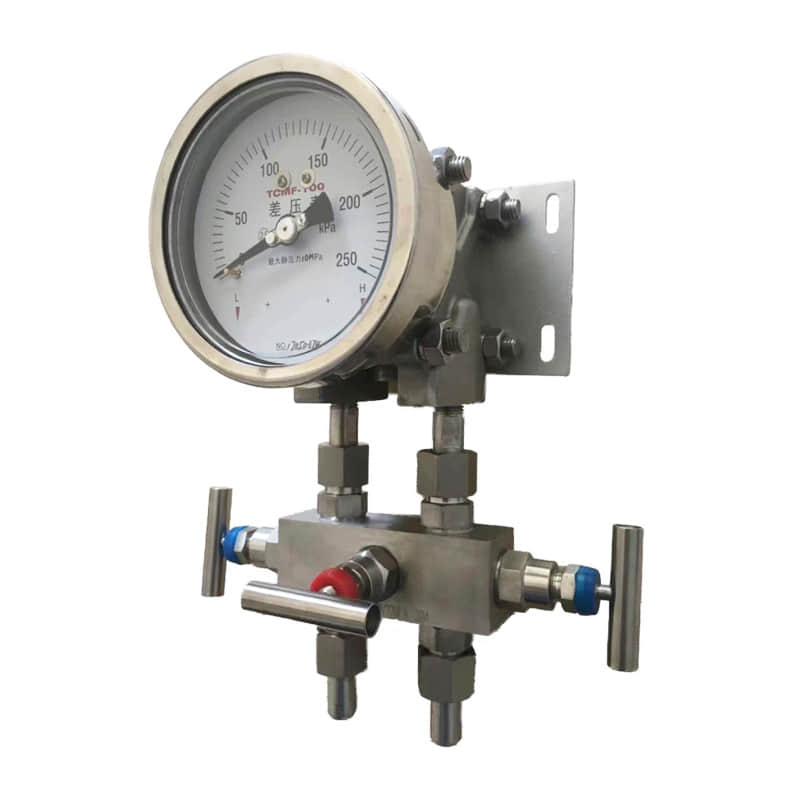
The Critical Role of Differential Pressure Gauges
Differential pressure (DP) gauges measure the difference between two pressures, making them essential for monitoring the performance of filters, strainers, and flow elements. In the oil and gas industry, they are used to detect blockages in pipelines; in pharmaceutical manufacturing, they ensure cleanroom pressures remain within strict parameters; in HVAC systems, they track air filter loading. The versatility of DP gauges means that they are deployed in some of the most demanding environments imaginable, from offshore platforms to chemical processing plants. Any failure in accuracy can lead to undetected leaks, unsafe operating conditions, or costly downtime. Consequently, the manufacturing process must be meticulous, with each gauge subjected to rigorous testing to verify its calibration, integrity, and leak-tightness.
The factory pressure testing station is the heart of this quality assurance process. It is here that each differential pressure gauge is subjected to pressures exceeding its maximum operating rating, ensuring that the sensing element, welded joints, and casing can withstand the stresses of real-world application. Leak detection stations, on the other hand, focus on ensuring that the pressure chamber is completely sealed. Even microscopic leaks can compromise measurement accuracy and lead to catastrophic failures in severe service applications. Thus, a comprehensive testing protocol is not just a matter of quality—it is a matter of safety.
Jiangsu Hongguang Instrument Factory Co., Ltd.: An Industry Veteran
Founded in 1972, Jiangsu Hongguang Instrument Factory Co., Ltd. (hereafter referred to as Hongguang Instrument) has established itself as a state-owned enterprise of considerable standing. As a subsidiary of the SUYI Group, the company has leveraged decades of experience to become a leading manufacturer of industrial automation instruments, wireless control systems, and process control equipment. With a workforce steeped in engineering excellence, Hongguang Instrument has built a reputation for delivering products that combine precision, durability, and cost-effectiveness. The company’s commitment to quality is evidenced by its extensive list of certifications, including ISO 9001:2015 for quality management, ISO 14001:2015 for environmental management, and ISO 45001:2018 for occupational health and safety. Furthermore, certain products in its portfolio carry SIL (Safety Integrity Level) certification, a testament to their suitability for safety-critical applications.
Hongguang Instrument currently offers nine major product categories, covering flow, pressure, level, temperature, valves, calibrators, recorders, analyzers, and switches. These products serve a diverse array of industries, including petroleum, chemical, papermaking, water treatment, municipal engineering, food processing, power generation, steelmaking, coal, pharmaceutical, and environmental protection. The company’s client list reads like a who’s who of Chinese industry: CNPC, SINOPEC, GD Power Development Co., Ltd., China Huadian Corporation, China Huaneng Group, China Datang Corporation, Shenhua Group, and more than 70% of large iron and steel enterprises in China. This level of trust underscores the reliability of Hongguang Instrument’s products and the effectiveness of their testing and quality assurance protocols.
The Pressure Testing Station: Design and Capabilities
A pressure testing station in a factory such as Hongguang Instrument is not a simple benchtop rig. It is a sophisticated installation capable of subjecting instruments to controlled pressures, quickly and accurately. The station typically includes a series of calibrated pressure sources, deadweight testers, precision regulators, and digital pressure gauges for reference. For differential pressure gauges, the station must be able to apply both high and low pressures independently to each port, while measuring the resulting output. This allows technicians to verify that the gauge’s differential reading is accurate across its entire range.
At Hongguang Instrument, the pressure testing station is designed to handle gauges of various sizes and ranges. The station uses nitrogen or clean dry air as the pressure medium, depending on the test requirements. For high-pressure applications, a hydraulic pump may be employed. The testing process involves several stages. First, the gauge is subjected to a proof pressure test, where it is exposed to 1.5 times its rated maximum for a specified duration. This ensures that the sensing element and housing can withstand overpressure events without permanent deformation. Next, the gauge is calibrated across its operating range, with output readings compared against a high-accuracy reference standard. Finally, a leak test is conducted, which we will discuss in the next section.
The entire station is automated where possible, using data acquisition systems to record test results and generate certificates. This reduces human error and provides a traceable record for each instrument. The station also includes safety interlocks and blast shields to protect operators in the unlikely event of a burst diaphragm or other catastrophic failure. Such attention to detail is what sets a world-class factory apart.

Leak Detection Stations: Ensuring Perfect Seals
Leak detection is arguably the most critical test for a differential pressure gauge. A gauge with an internal leak may allow the process fluid to enter the internal mechanism, causing corrosion, calibration drift, or complete failure. External leaks can pose safety hazards, especially in hazardous atmospheres. Hongguang Instrument’s leak detection stations employ both pressure decay and mass spectrometer-based methods to detect even the smallest leakage paths.
The pressure decay method is the workhorse of leak detection. In this test, the gauge is pressurized to a predetermined level, then the pressure source is isolated. The pressure is monitored for a period of several minutes. If the pressure drops beyond an acceptable threshold, the gauge is rejected. This method is straightforward, but its sensitivity is limited by temperature fluctuations and the volume of the system. For higher sensitivity, Hongguang Instrument uses helium mass spectrometry leak detection. In this technique, the gauge is placed in a vacuum chamber and helium is sprayed on the outside, or the gauge is pressurized with helium and the chamber is evacuated. Any helium that leaks through the gauge is detected by the mass spectrometer, which can detect leak rates as low as 1 x 10^-9 mbar·L/s. This level of sensitivity ensures that even the most minute defects are caught before the product leaves the factory.
Leak detection stations are not only used for assembled gauges but also for individual components such as diaphragms, capsules, and welded joints. In-process testing ensures that subcomponents meet specifications, reducing the cost of rework. For example, the diaphragm capsule that converts differential pressure into mechanical motion is tested for both burst strength and leak-tightness before assembly. This proactive approach is a hallmark of Hongguang Instrument’s manufacturing philosophy.
Testing Procedures and Standards
All pressure testing and leak detection procedures at Hongguang Instrument are performed in accordance with international standards such as ASME B40.100, IEC 60770, and ISO 3511. These standards define the test pressures, tolerances, and performance criteria. The factory’s quality management system, certified to ISO 9001:2015, ensures that procedures are documented, consistently implemented, and audited regularly. Each test station is equipped with calibration gas or liquid, and the test equipment itself is calibrated at defined intervals against traceable standards.
The test sequence for a typical differential pressure gauge at Hongguang Instrument is as follows:
- Incoming inspection of all materials and components.
- Proof pressure test at 1.5 times the rated maximum static pressure.
- Calibration test across 0%, 25%, 50%, 75%, and 100% of the differential pressure range.
- Leak test using pressure decay or helium mass spectrometry.
- Final visual inspection and functional check of zero and span adjustments.
- Documentation of results and issuance of a calibration certificate.
For SIL-certified products, the testing is even more stringent. The SIL certification, granted by Ente Certificazione Macchine, requires proven reliability data and fault tolerance. Hongguang Instrument’s ultrasonic level meters, magnetic level indicators, electromagnetic flow meters, metal tube rotameters, radar level meters, pressure transmitters, temperature transmitters, and tuning fork level controllers all carry SIL certification, indicating their suitability for safety-instrumented systems.
Quality Assurance and International Certifications
Quality assurance at Hongguang Instrument extends beyond the testing stations. The company’s dedication to quality is reflected in its certifications:
| Certification | Standard |
|---|---|
| ISO 9001:2015 | Quality Management Systems |
| ISO 14001:2015 | Environmental Management Systems |
| ISO 45001:2018 | Occupational Health and Safety Management |
| SIL | Safety Integrity Level (as applicable) |
These certifications are not just badges on the wall. They represent a company-wide commitment to continuous improvement, risk management, and customer satisfaction. The factory’s testing stations are audited both internally and by external certification bodies. This ensures that the pressure testing and leak detection processes remain robust and effective over time. Furthermore, the company’s products are known for their stable performance, which directly translates into lower after-service costs for customers. In the long run, a reliable differential pressure gauge from Hongguang Instrument saves money and prevents operational headaches.
Product Portfolio and Applications
While this article focuses on differential pressure gauges, Hongguang Instrument offers a broad range of products that often incorporate differential pressure measurement principles. For instance, the Multi-Variable Differential Pressure Flow Transmitter is designed to be used with throttling devices such as V-cones, orifice plates, Verabars, nozzles, and Venturis. It directly displays instantaneous flow rate and total flow, with flow units selectable in M3, Ton, or MMSCFD. These transmitters are integral to custody transfer and process control applications.
Other flow measurement products include the electromagnetic flow meter, which is ideal for water flow rate measurement in water projects, sewage treatment plants, pulp industry, and flocculating agent factories. The vortex flow meter measures steam flow rate and is predominantly used in power plants and supply heating industries. The thermal mass flow meter is perfect for measuring compressed air, natural gas, and biogas flow rates. Each of these devices may integrate differential pressure technology in some form, highlighting the importance of the factory’s pressure testing capabilities.
In the realm of level measurement, Hongguang Instrument provides radar level meters that can measure liquid levels of water, oil, and chemical liquids in storage tanks, as well as powder, grain, and particle silos. Magnetic level indicators offer a simple, robust solution for liquid level measurement and can be configured with level transmitters to output analog current signals, or with non-hold or hold type level switches for level control or alarm. The pressure transmitter is widely used in chemical industry to measure process pressure. The wall-mounted Doppler open channel flow meter measures flow velocity and can calculate flow rate using algorithms, servicing sewage pipes, total stormwater pipes, and irrigation channels equipped with weirs or flumes.

All these products benefit from the stringent pressure testing and leak detection procedures implemented during manufacturing. Whether a sensor is designed for high-pressure steam or low-pressure cleanroom environments, the integrity of its seals and the accuracy of its output are paramount. Hongguang Instrument’s investment in world-class testing stations ensures that every product leaving the factory performs as promised.
Real-World Applications and Case Studies
The true test of a differential pressure gauge is its performance in the field. Hongguang Instrument’s products have been deployed in some of the most challenging industrial settings. For example, in the power generation industry, the company’s vortex flow meters and pressure transmitters are used to monitor steam lines, helping to optimize boiler efficiency. In petrochemical plants, differential pressure transmitters are used to measure tank levels and flow rates of corrosive chemicals. The company’s clients include CNPC and SINOPEC, which operate vast networks of refineries and pipelines, where accurate and reliable instrumentation is non-negotiable.
One notable case involves a major steelmaking enterprise in China, which is part of the over 70% of large iron and steel companies that rely on Hongguang Instrument. The steelmaking process requires precise control of gases, pressures, and temperatures. The differential pressure gauges from Hongguang Instrument have been used to monitor the pressure drops across gas cleaning filters and to ensure the safe operation of blast furnaces. The gauges have performed flawlessly, with minimal calibration drift and no reported leaks, even after years of service.
In the water treatment industry, the electromagnetic flow meters and open channel flow meters have been instrumental in measuring both clean and wastewater flow rates. The ability to withstand harsh environments, including exposure to chemicals and submersion, is a direct result of rigorous leak testing. A failure in a flow meter at a wastewater treatment plant could cause regulatory non-compliance, but Hongguang Instrument’s products have consistently demonstrated reliability.
The Future of Pressure Testing and Leak Detection
As industries evolve, so too do the demands on differential pressure gauges. Increasingly, the industry is moving towards smart devices with wireless communication and self-diagnostics. Hongguang Instrument is at the forefront of this trend, integrating wireless control systems into their product offerings. However, even the smartest gauge is only as good as its mechanical integrity. Thus, pressure testing and leak detection stations are also evolving. The future will see even greater automation, with automated inspection systems using artificial intelligence to detect micro-defects in welds and diaphragms. Digital twin technology may allow for virtual testing, simulating the behavior of a gauge under stress before it is physically manufactured. Nevertheless, the fundamental principles of pressure testing and leak detection will remain unchanged: keep the process fluid inside, keep the environment outside, and ensure the measurement is accurate.
Hongguang Instrument is committed to staying ahead of these trends. The company’s ongoing investment in R&D, as well as in its testing infrastructure, positions it well for the future. With a heritage reaching back to 1972 and a forward-looking approach, Hongguang Instrument continues to set the standard for quality in differential pressure instrumentation.
Conclusione
Differential pressure gauge factory pressure testing and leak detection stations are the silent guardians of industrial safety and efficiency. Without them, the reliability of countless processes would be compromised. Jiangsu Hongguang Instrument Factory Co., Ltd. exemplifies best practices in this domain, combining decades of manufacturing experience with state-of-the-art testing facilities. The company’s commitment to quality is evident in its certifications, its client list, and the stable performance of its products in the field. When you choose a differential pressure gauge from Hongguang Instrument, you are not just buying a piece of hardware; you are investing in peace of mind.
In summary, the pressure testing and leak detection stations at Jiangsu Hongguang Instrument Factory Co., Ltd. are instrumental in ensuring that each differential pressure gauge meets rigorous standards. Founded in 1972, this state-owned enterprise has become a trusted supplier to major Chinese industrial conglomerates, with certifications including ISO 9001, ISO 14001, ISO 45001, and SIL for select products. The factory’s testing protocols involve proof pressure testing, precision calibration, and leak detection using pressure decay and helium mass spectrometry. These processes guarantee that products such as the multi-variable differential pressure flow transmitter, electromagnetic flow meters, and pressure transmitters perform reliably in demanding applications across the petroleum, chemical, power generation, and water treatment industries. With over half a century of experience and a commitment to innovation, Hongguang Instrument continues to deliver high-quality measurement solutions that reduce operational costs and enhance safety.