

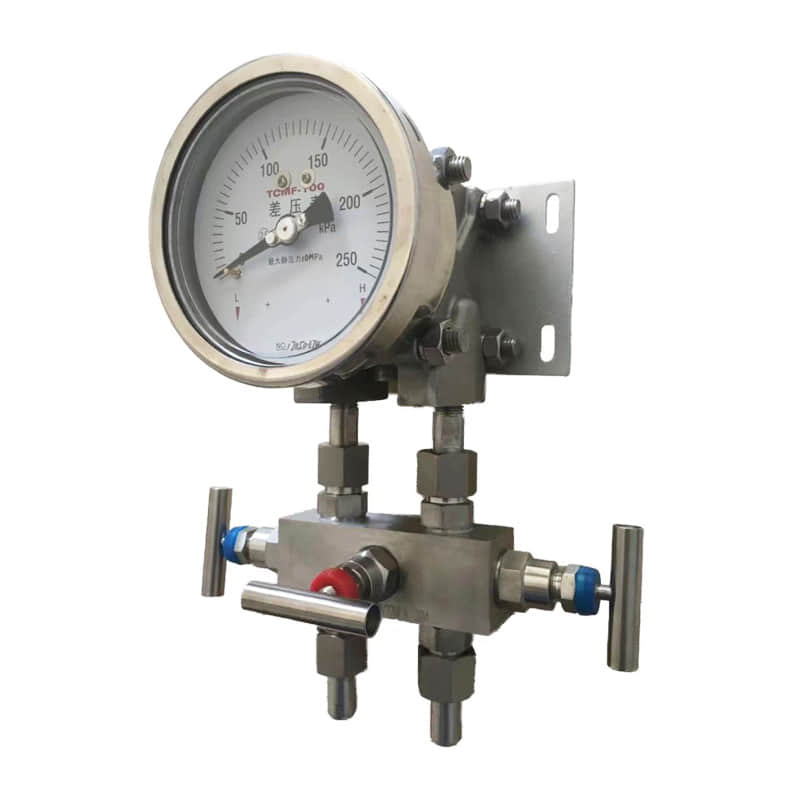
A differential pressure gauge is a device used to measure the difference in pressure between two points in a system. It is commonly used in industrial settings to monitor and control various processes, such as fluid flow, gas flow, and filtration systems.
Components of a Differential Pressure Gauge
1. Bourdon Tube: This is the most common element used in pressure gauges. It is a C-shaped tube that is connected to the inlet and outlet ports of the gauge. When the pressure difference between the two points increases, the tube tends to straighten out, creating a movement that is converted into an electrical signal.
2. Transducer: The transducer is responsible for converting the mechanical movement of the bourdon tube into an electrical signal. It usually consists of a strain gauge or a piezoelectric crystal that converts the movement into an electrical signal.
3. Display Unit: The display unit is where the pressure reading is displayed. The most common type of display unit is a dial gauge, but digital displays are also becoming more popular.
4. Onset/Offset Valves: These valves are used to adjust the amount of pressure that is allowed to enter the differential pressure gauge. They are used to calibrate the gauge and ensure accurate readings.
5. Snubber: A snubber is a small device that is used to dampen any rapid pressure fluctuations. This helps to prevent damage to the gauge and ensure accurate readings.
How a Differential Pressure Gauge Works
A differential pressure gauge works by comparing the pressure at two different points in a system. This is achieved through the use of the bourdon tube, which is connected to the two points via inlet and outlet ports.
When there is a difference in pressure between the two points, it causes the bourdon tube to straighten out or bend in a specific direction, depending on the difference in pressure. This movement is then converted into an electrical signal by the transducer and displayed on the gauge’s display unit.
Types of Differential Pressure Gauges
1. Diaphragm Differential Pressure Gauge: This type of gauge uses a diaphragm instead of a bourdon tube to measure the pressure difference. It is commonly used in applications that require high accuracy and can handle corrosive or high-temperature environments.
2. Bellows Differential Pressure Gauge: Similar to the diaphragm gauge, this type also uses a bellows instead of a bourdon tube. It is commonly used in applications where accuracy is critical, such as in aerospace and pharmaceutical industries.
3. Piston Differential Pressure Gauge: This type of gauge uses a piston to measure the pressure difference. It is often used in low-pressure applications and can handle higher pressure differentials compared to other types of gauges.
4. Manometer Differential Pressure Gauge: This type of gauge uses a U-shaped tube filled with liquid to measure the pressure difference. The liquid in the tube moves in response to the pressure difference and is measured through a scale on the gauge.
Applications of a Differential Pressure Gauge
1. Flow Measurement: One of the most common applications of a differential pressure gauge is in measuring the flow of liquids and gases in a system. By measuring the pressure difference at two points, the flow rate can be calculated using a formula.
2. Filter Monitoring: Differential pressure gauges are also used to monitor the efficiency of filters in a system. By measuring the pressure difference on either side of a filter, its clogging level can be determined, and appropriate action can be taken.
3. Leak Detection: In certain applications, a differential pressure gauge can be used to detect leaks in a closed system. By monitoring the pressure difference at different points, any abnormalities or fluctuations can indicate the presence of a leak.
a differential pressure gauge is an important tool in monitoring and controlling various processes in industries. It provides accurate and reliable pressure readings, making it an essential instrument for maintaining the efficiency and safety of systems.

Il nostro manometro differenziale offers unparalleled accuracy and durability, making it the ideal choice for demanding environments. With its advanced design and user-friendly interface, it is an essential tool for any professional looking to ensure efficient operation and optimal performance.
Ecco alcune domande frequenti sul manometro differenziale:
1: What is a differential pressure gauge?
A differential pressure gauge is a type of pressure gauge that measures the difference in pressure between two points in a fluid system.
2: What are the main components of a differential pressure gauge?
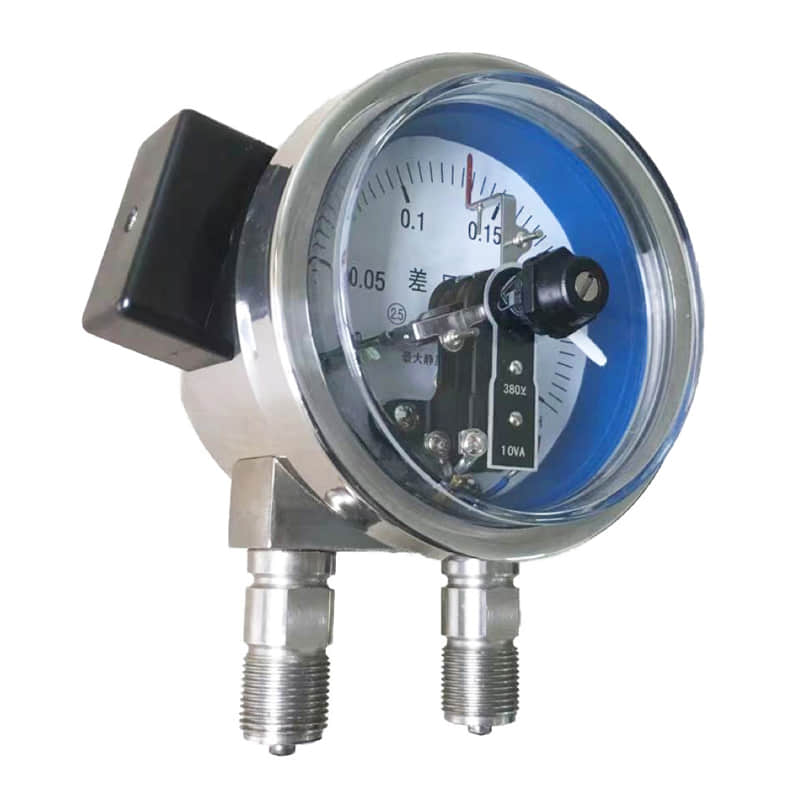
The main components of a differential pressure gauge include the gauge body, diaphragm, dial, pointer, and connections for fluid inlet and outlet.
3: How does a differential pressure gauge work?
A differential pressure gauge works by measuring the force exerted on a diaphragm or other elastic element by the difference in pressure between two points in a fluid system. This force is then converted into a reading on the gauge dial.
4: What is the difference between a single-scale and dual-scale differential pressure gauge?
A single-scale differential pressure gauge measures the difference in pressure in one unit, while a dual-scale gauge can measure in two different units (e.g. psi and bar).
5: What is the maximum pressure that a differential pressure gauge can measure?
The maximum pressure that a differential pressure gauge can measure depends on the specific model, but it typically ranges from 100 psi to 10,000 psi.
6: Can a differential pressure gauge be used for both gas and liquid applications?
Yes, there are differential pressure gauges designed for both gas and liquid applications. It is important to select the appropriate gauge for the specific application.
7: What is a pressure range and why is it important?
The pressure range refers to the minimum and maximum pressures that a differential pressure gauge can accurately measure. It is important to select a gauge with a suitable pressure range for the specific application.
8: What units of measurement are typically used for differential pressure gauges?
Differential pressure gauges can use a variety of units of measurement, such as psi, bar, kPa, mbar, mmHg, and inH2O, depending on the specific model and application.