


Introduction
When it comes to flow measurement, selecting the right type of flow meter for your application is crucial. Different fluids and processes require specific technologies to ensure accurate, reliable, and efficient measurement. For conductive liquids, one of the most effective solutions available is the magnetic flow meter(also known as a magmeter). This versatile, high-precision instrument stands out for its ability to handle challenging fluid types such as slurries, chemicals, and wastewater—often encountered in industries like water treatment, chemical processing, and food production. In this article, we will explore why magnetic flow meters are the best choice for measuring the flow of conductive liquids and highlight the benefits they provide to various industrial applications.
What is a Magnetic Flow Meter?
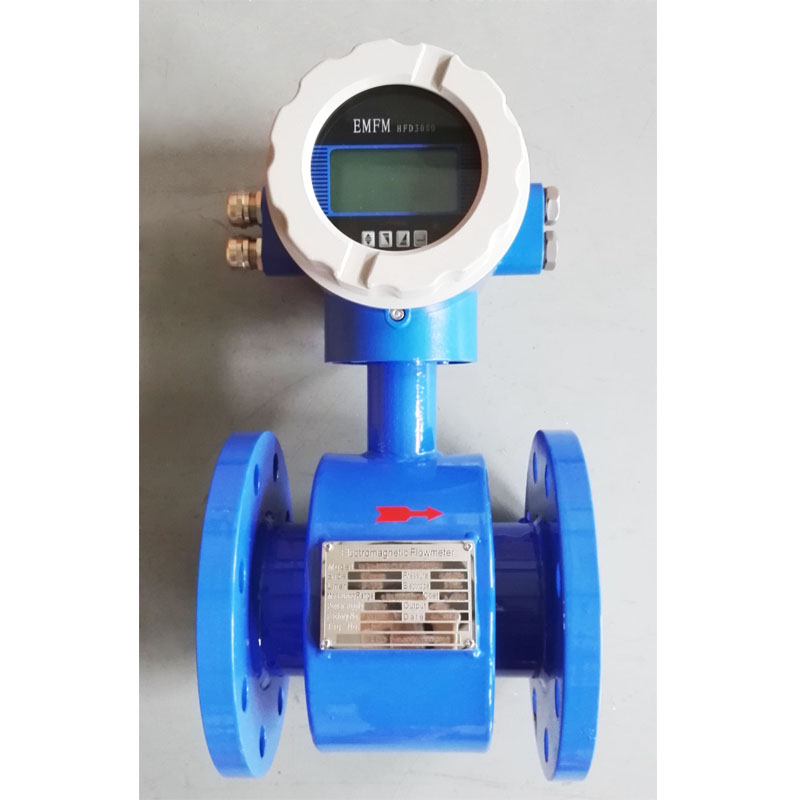
A magnetic flow meter is a device used to measure the flow of conductive liquids, slurries, and even certain gases. It operates based on Faraday’s Law of Induction, which states that when a conductive liquid moves through a magnetic field, a voltage is induced that is proportional to the velocity of the fluid. This voltage is detected by electrodes within the flow meter, which then outputs a flow measurement.
Unlike traditional flow meters that rely on mechanical parts, magnetic flow meters operate without moving components, which gives them significant advantages in terms of maintenance, durability, and accuracy.
Why Magnetic Flow Meters Are Ideal for Conductive Liquids
1. Accuracy and Reliability in Conductive Fluids
Magnetic flow meters are designed specifically for measuring conductive liquids—fluids that can carry an electric charge. Common examples include water, wastewater, acids, chemicals, and slurries. As long as the liquid is conductive (such as being ionized or having some degree of dissolved solids), a magnetic flow meter will provide accurate and reliable flow readings.
Because these meters measure the flow based on the velocity of the liquid, they do not require the use of mechanical components to interact with the fluid. This leads to extremely accurate measurements, even in challenging conditions where other flow meters, such as turbine or positive displacement meters, may struggle.
2. No Moving Parts for Long-Lasting Durability
One of the primary advantages of magnetic flow meters is that they have no moving parts. Unlike traditional flow meters, such as turbine or mechanical meters, which rely on moving components to measure the flow of liquids, magmeters use electromagnetic fields to measure the flow without coming into direct contact with the fluid. This absence of moving parts reduces the risk of wear and tear, ensuring that the meter operates reliably for a long time with minimal maintenance.
In industries where abrasive or corrosive liquids are involved, such as chemical manufacturing or mining, magnetic flow meters’ lack of moving parts makes them highly durable and ideal for long-term use. They offer low maintenance costs and a longer service life compared to mechanical alternatives.
3. Non-Invasive Measurement
Since magnetic flow meters do not rely on moving parts or mechanical sensors, they can be used for measuring highly viscous fluids, slurries, or liquids with suspended solids without affecting the flow. The magnetic field generated by the meter does not obstruct the flow path, and there is no need for a sensor to physically interact with the fluid. This non-invasive measurement allows for accurate readings even in harsh conditions, where clogging, sediment buildup, or changes in viscosity might pose problems for other types of flow meters.
For example, in the pulp and paper industry, where slurries containing fibers or solid particles need to be monitored, magnetic flow meters can provide accurate measurements without the risk of clogging or mechanical failure. Similarly, in wastewater treatment, where the flow contains varying levels of solids, a magnetic flow meter provides consistent and reliable data without disruption.
4. Wide Range of Applications
Magnetic flow meters are suitable for a diverse range of industries due to their ability to measure the flow of conductive liquids across a broad spectrum of temperatures, pressures, and flow rates. Some key applications include:
- Traitement de l'eau et des eaux usées: In water treatment plants, magnetic flow meters are used to monitor the flow of clean water, effluent, chemicals, and sludge. Their ability to handle liquids with suspended solids and varying flow conditions makes them perfect for this application.
- Traitement chimique: Chemical manufacturers rely on magnetic flow meters to accurately measure the flow of acids, bases, and other chemicals in reactors, pipelines, and storage tanks. Since these chemicals are often corrosive, the durability of magmeters in these environments is a significant advantage.
- Food and Beverage Industry: Magnetic flow meters are commonly used to measure the flow of liquid ingredients, syrups, and beverages in food and beverage production. Their sanitary design (which can include food-grade materials) ensures compliance with hygiene standards.
- Pharmaceutical Manufacturing: Pharmaceutical companies require precise flow control for their ingredients, and magnetic flow meters can be relied upon to maintain accuracy without contamination risks.
- Mining and Pulp and Paper: In industries such as mining, where slurries containing solids and minerals are present, magnetic flow meters measure flow reliably without clogging or wear.
5. Minimal Pressure Drop
Magnetic flow meters are ideal for systems where minimizing pressure drop is essential. Since these meters do not contain moving parts or obstruction to the flow, they offer negligible pressure loss compared to traditional flow meters like turbine or positive displacement meters. This characteristic is especially valuable in systems that require constant pressure levels, such as in water treatment or chemical processes, where pressure fluctuations can negatively affect the overall system performance.
6. Customizable for Harsh Environments
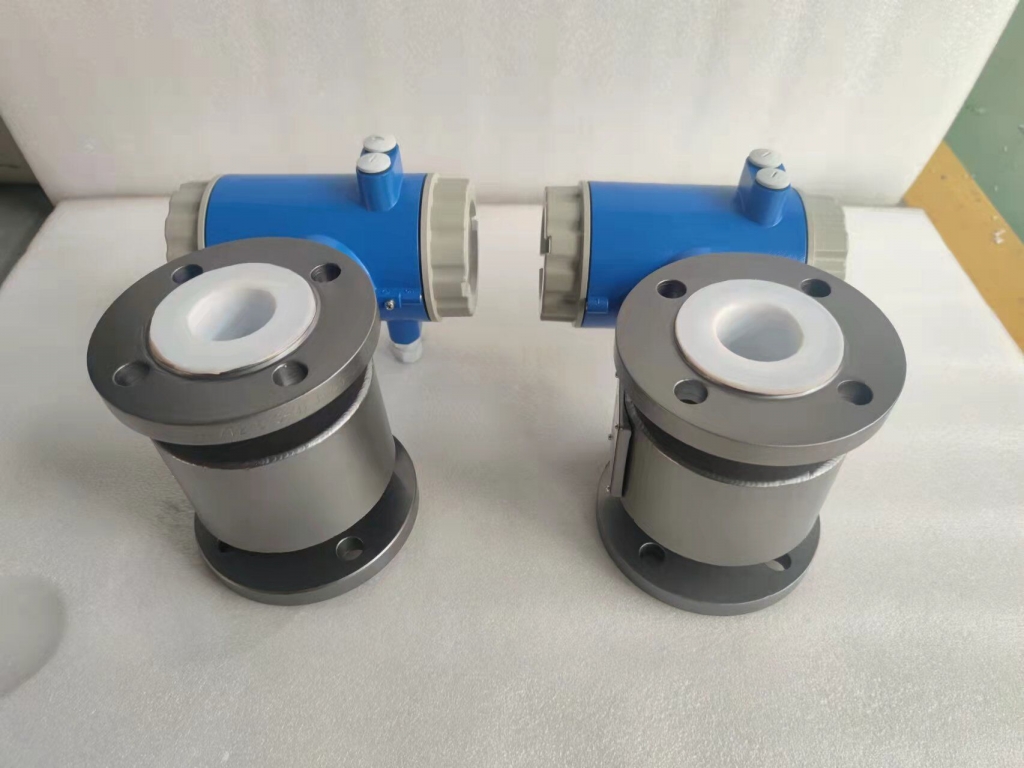
Magnetic flow meters can be tailored for use in extreme conditions. These meters are available in various materials, such as stainless steel, Hastelloy, or PTFE linings, to withstand corrosion and abrasion. They can also be designed to operate at high pressures and temperatures, which is crucial for industries like chemical processing and oil and gas. The ability to customize magnetic flow meters for specific process requirements ensures that they can operate reliably in harsh, corrosive, or high-temperature environments.
Comparison with Other Flow Measurement Technologies
While magnetic flow meters offer significant advantages for measuring conductive liquids, it is important to consider them in comparison with other types of flow meters. Below, we compare magnetic flow meters with some of the most common alternatives: turbine flow meters, positive displacement flow meters, and ultrasonic flow meters.
1. Magnetic Flow Meters vs. Turbine Flow Meters
Turbine flow meters measure flow by using a rotor inside the flow path. As the fluid passes through the meter, it causes the rotor to spin, and the number of rotations is proportional to the flow rate.
Advantages of Magnetic Flow Meters:
- No moving parts, reducing maintenance and mechanical failure risks.
- More accurate in dirty or slurry-like fluids, where turbine meters may clog.
- No significant pressure loss.
Advantages of Turbine Flow Meters:
- Generally more affordable than magnetic flow meters for low-flow applications.
- Suitable for clean, low-viscosity liquids.
2. Magnetic Flow Meters vs. Positive Displacement Flow Meters
Positive displacement flow meters measure flow by trapping a fixed volume of liquid and counting the number of times this volume is displaced. These meters are best suited for highly accurate flow measurements of small, discrete amounts of liquid.
Advantages of Magnetic Flow Meters:
- Can handle larger volumes and continuous flow rates.
- Suitable for a wide range of conductive liquids and slurries.
Advantages of Positive Displacement Flow Meters:
- Extremely accurate for measuring small volumes and low flow rates.
- Ideal for precise batch measurements.
3. Magnetic Flow Meters vs. Ultrasonic Flow Meters
Ultrasonic flow meters use sound waves to measure the velocity of the fluid flowing through a pipe. These meters can either be clamp-on (non-intrusive) or in-line (directly installed into the pipe).
Advantages of Magnetic Flow Meters:
- Better suited for conductive liquids, especially slurries or liquids with suspended solids.
- No need for special installation conditions.
Advantages of Ultrasonic Flow Meters:
- Can measure both conductive and non-conductive fluids.
- Non-invasive (clamp-on models) and easy to install without cutting pipes.

Conclusion
Magnetic flow meters are undoubtedly one of the best choices for measuring the flow of conductive liquids across a wide range of industries. Their accuracy, reliability, and durability make them ideal for applications in water treatment, chemical processing, food and beverage production, and many other industries dealing with corrosive, dirty, or viscous fluids.
With no moving parts, low maintenance requirements, and the ability to handle extreme conditions, magnetic flow meters provide unmatched performance, especially when compared to other types of flow meters. At Usine d'instruments de Hongguang, we offer high-quality magnetic flow meters that are designed to meet the rigorous demands of industrial applications, ensuring that you achieve optimal flow measurement accuracy and efficiency. Whether you are looking for a solution to measure clean water, chemicals, slurries, or other conductive fluids, our magnetic flow meters will deliver the reliability and precision you need to keep your processes running smoothly.