
Water flow meter is an instrument used to measure the flow rate of water in a pipe or system. It is commonly used in various industries such as water treatment, irrigation, and plumbing, to monitor and control the amount of water being utilized.
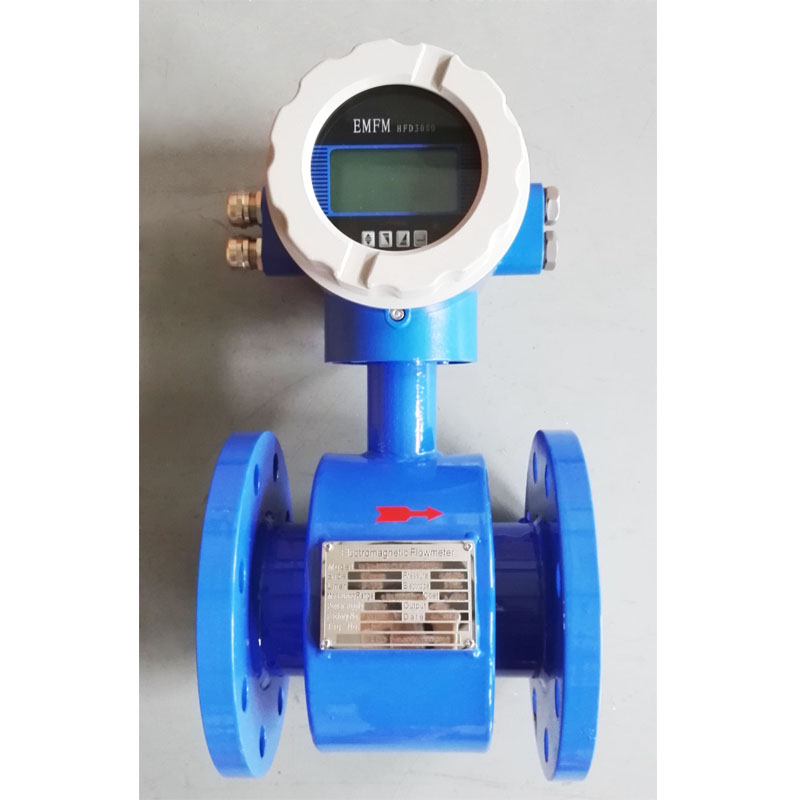
A water flow meter typically consists of a sensor, a transmitter, and a display unit. The sensor is placed in the water flow path and measures the velocity of the water, which is then converted into an electrical signal. The transmitter then amplifies and transmits this signal to the display unit, where it is converted into a readable flow rate value.
Different types of water flow meters are available, such as electromagnetic, ultrasonic, and turbine. Each type has its own advantages and is suitable for different applications. For instance, electromagnetic flow meters are ideal for measuring clean water flow, while ultrasonic flow meters are suitable for dirty water or slurry applications.
Water flow meters are essential for monitoring water usage and ensuring efficient and optimal operation of systems. They can also help identify potential leaks or problems in the water distribution system, saving both water and money.

Notre débitmètre économique est la solution idéale pour une gestion efficace des fluides. Grâce à ses mesures précises et fiables, il vous permet de surveiller et de contrôler facilement le débit des fluides dans votre système. Cela permet non seulement d'optimiser la productivité, mais aussi de réduire les coûts d'énergie et de maintenance. Son interface conviviale et sa simplicité d'installation en font un ajout facile à votre système. Choisissez notre débitmètre et faites l'expérience d'une gestion des fluides transparente et rentable.
Notre société est fière de présenter son dernier produit - un débitmètre non intrusif innovant qui révolutionne l'industrie. Contrairement aux débitmètres traditionnels qui nécessitent des processus d'installation compliqués et fastidieux, notre débitmètre non intrusif est incroyablement facile à installer. Cela est possible grâce à sa conception non intrusive, qui élimine la nécessité de couper les canalisations ou d'interrompre les opérations. Il en résulte une expérience d'installation transparente et sans tracas. Notre débitmètre est également d'une grande exactitude et d'une grande précision, ce qui garantit des mesures de débit fiables et précises, sans perturber vos opérations. Avec notre débitmètre non intrusif, nous changeons la donne et établissons une nouvelle norme en matière de facilité d'installation et de fonctionnalité.

Water flow meter is a measuring instrument used to quantify the movement of water through a pipeline or system. This device plays a crucial role in various industries including water treatment, irrigation, and utilities. By accurately measuring the volume or rate of water flow, it helps in monitoring and controlling the usage and distribution of water. With the continuous advancements in technology, water flow meters have evolved from traditional mechanical devices to modern electronic and digital meters, providing even more precise and reliable measurements. In this report, we will discuss the different types of water flow meters and their applications, as well as the benefits they offer for efficient water management.
2.Can a water flow meter measure both volume and flow rate?
3.What is the recommended installation location for a water flow meter?
4.Are there different types of water flow meters available in the market?
5.Do water flow meters require regular maintenance?
6.Can a water flow meter be used for industrial and residential purposes?
7.What types of materials are used to make water flow meters?
8.How does a water flow meter help with water conservation efforts?
9.What are the benefits of using a wireless water flow meter?
10.What are the main components of a water flow meter?
1.How does a digital water flow meter differ from a mechanical one?
A digital water flow meter uses electronic sensors and a digital display to measure and display the flow rate of water, while a mechanical water flow meter uses mechanical components such as gears and turbines to measure and display the flow rate.
Some key differences between the two types of meters include:
1. Accuracy: Digital water flow meters are generally more accurate than mechanical ones. This is because they use electronic sensors that can measure flow rate more precisely, while mechanical meters may be affected by wear and tear over time.
2. Display: Digital water flow meters have a digital display that shows the flow rate in real-time, while mechanical meters typically have a dial or counter that needs to be read manually.
3. Ease of use: Digital water flow meters are easier to use as they require minimal maintenance and do not need to be calibrated regularly like mechanical meters.
4. Data recording: Digital water flow meters can record and store data, allowing for easier tracking and analysis of water usage over time. Mechanical meters do not have this capability.
5. Cost: Digital water flow meters are generally more expensive than mechanical ones due to their advanced technology and features.
6. Compatibility: Digital water flow meters can be integrated with other digital systems and devices, such as smart home systems or water management software, while mechanical meters cannot.
Overall, digital water flow meters offer more advanced features and capabilities compared to mechanical meters, making them a more popular choice for modern water management systems.
2.Can a water flow meter measure both volume and flow rate?
Yes, a water flow meter can measure both volume and flow rate. The volume is the total amount of water that has passed through the meter, while the flow rate is the rate at which the water is flowing through the meter. Some water flow meters have the capability to display both volume and flow rate simultaneously, while others may require manual calculations to determine one or the other.

3.What is the recommended installation location for a water flow meter?
The recommended installation location for a water flow meter is typically on the main water supply line, after the water meter and before any branches or splits in the line. This allows for accurate measurement of the total water flow entering a building or property. It is also important to ensure that the flow meter is easily accessible for maintenance and reading.
4.Are there different types of water flow meters available in the market?
Yes, there are several types of water flow meters available in the market, including:
1. Mechanical flow meters: These meters use mechanical components such as gears, pistons, or turbines to measure the flow of water.
2. Ultrasonic flow meters: These meters use ultrasonic waves to measure the velocity of water flow.
3. Magnetic flow meters: These meters use a magnetic field to measure the flow of conductive liquids such as water.
4. Vortex flow meters: These meters use the principle of vortex shedding to measure the flow of water.
5. Differential pressure flow meters: These meters measure the pressure difference across an obstruction in the flow of water.
6. Turbine flow meters: These meters use a turbine to measure the flow of water.
7. Coriolis flow meters: These meters use the Coriolis effect to measure the mass flow rate of water.
8. Positive displacement flow meters: These meters measure the volume of water passing through by counting the number of times a chamber is filled and emptied.
9. Electromagnetic flow meters: These meters use Faraday’s law of electromagnetic induction to measure the flow of conductive liquids such as water.
10. Thermal mass flow meters: These meters measure the mass flow rate of water by using the heat transfer principle.
11. Open channel flow meters: These meters are used to measure the flow of water in open channels such as rivers, canals, and streams.
12. Insertion flow meters: These meters are inserted into a pipe to measure the flow of water.
13. Clamp-on flow meters: These meters use ultrasonic waves to measure the flow of water without the need for cutting into the pipe.
14. Smart flow meters: These meters use advanced technology such as wireless communication and data logging to provide real-time flow data.

5.Do water flow meters require regular maintenance?
Yes, water flow meters require regular maintenance to ensure accurate readings and proper functioning. This may include cleaning, calibration, and replacement of worn or damaged parts. The frequency of maintenance will depend on the type of flow meter and the conditions in which it is used. It is recommended to follow the manufacturer’s guidelines for maintenance and to schedule regular inspections by a trained professional.
6.Can a water flow meter be used for industrial and residential purposes?
Yes, a water flow meter can be used for both industrial and residential purposes. In industrial settings, water flow meters are commonly used to measure the flow rate of water in various processes and systems, such as cooling systems, boilers, and irrigation systems. In residential settings, water flow meters are used to measure the amount of water used by households for billing purposes and to detect leaks. They can also be used to monitor water usage for conservation purposes.
7.What types of materials are used to make water flow meters?
1. Metals: Commonly used metals for water flow meters include stainless steel, brass, and aluminum. These materials are durable, corrosion-resistant, and can withstand high pressures and temperatures.
2. Plastics: Thermoplastics such as PVC, polypropylene, and nylon are also used in water flow meters. They are lightweight, cost-effective, and resistant to chemicals and corrosion.
3. Ceramics: Ceramic materials such as alumina and zirconia are used in some specialized water flow meters. They have excellent wear resistance and can withstand high temperatures and pressures.
4. Glass: Glass is used in some flow meters for its transparency, allowing for visual inspection of the flow. It is also resistant to corrosion and can withstand high temperatures.
5. Rubber and elastomers: These materials are used in the construction of flow meters to provide a seal between different components and to protect against vibration and shock.
6. Magnetic materials: Some flow meters use magnetic materials such as neodymium or samarium cobalt to measure the flow of conductive liquids. These materials are highly sensitive to changes in magnetic fields.
7. Ultrasonic materials: Ultrasonic flow meters use materials such as piezoelectric crystals or ceramics to generate and receive ultrasonic signals to measure the flow of liquids.
8. Composites: Some flow meters use composite materials, which are a combination of two or more materials, to provide a balance of properties such as strength, durability, and corrosion resistance.
9. Rubber and elastomers: These materials are used in the construction of flow meters to provide a seal between different components and to protect against vibration and shock.
10. Electronic components: Modern flow meters may also contain electronic components such as sensors, transmitters, and displays, which are typically made of materials such as silicon, copper, and plastic.
8.How does a water flow meter help with water conservation efforts?
A water flow meter is a device that measures the amount of water flowing through a pipe or system. It can help with water conservation efforts in the following ways:
1. Detecting leaks: A water flow meter can detect even small leaks in a system, which can lead to significant water waste over time. By identifying and repairing leaks, water flow meters can help conserve water and prevent unnecessary water loss.
2. Monitoring water usage: Water flow meters can track the amount of water being used in a household or building. This information can help individuals and organizations identify areas where water is being used excessively and make changes to reduce consumption.
3. Setting usage targets: With the data provided by a water flow meter, individuals and organizations can set specific targets for water usage. This can help promote more mindful and efficient water use, leading to conservation efforts.
4. Identifying inefficient appliances: Water flow meters can also help identify appliances or fixtures that are using excessive amounts of water. By replacing these with more efficient options, water consumption can be reduced, leading to conservation efforts.
5. Encouraging responsible water use: By providing real-time data on water usage, water flow meters can encourage individuals and organizations to be more mindful of their water consumption. This can lead to more responsible water use and conservation efforts.
Overall, water flow meters play a crucial role in water conservation efforts by providing valuable data and promoting responsible water use.

9.What are the benefits of using a wireless water flow meter?
1. Easy installation: Wireless water flow meters do not require any wiring or drilling, making them easy to install and set up. This saves time and effort compared to traditional wired meters.
2. Remote monitoring: With wireless water flow meters, you can monitor your water usage remotely from anywhere, using a computer or a mobile device. This allows you to keep track of your water consumption and detect any leaks or abnormalities in real-time.
3. Cost-effective: Wireless water flow meters eliminate the need for manual meter reading, reducing labor costs and potential human errors. They also help identify and fix leaks quickly, saving you money on water bills.
4. Accurate readings: Wireless water flow meters use advanced technology to provide accurate and precise readings of water flow. This helps in better management of water usage and conservation efforts.
5. Real-time alerts: Some wireless water flow meters come with the feature of sending real-time alerts in case of abnormal water usage or leaks. This allows for prompt action to be taken, preventing any potential damage or wastage.
6. Easy data management: Wireless water flow meters come with software that allows for easy data management and analysis. This helps in identifying patterns and trends in water usage, which can aid in making informed decisions for water conservation.
7. Compatibility: Wireless water flow meters are compatible with various types of pipes and can be used for both residential and commercial applications. They can also be integrated with other smart home systems for a more comprehensive monitoring and control.
8. Energy efficiency: By accurately measuring water flow, wireless water flow meters can help in optimizing energy usage for water pumps and other equipment, leading to energy savings and reduced utility costs.
10.What are the main components of a water flow meter?
1. Sensor: The sensor is the main component of a water flow meter that measures the flow rate of water passing through it. There are different types of sensors used in water flow meters, such as electromagnetic, ultrasonic, turbine, and paddlewheel.
2. Transmitter: The transmitter is responsible for converting the signal from the sensor into a readable format, such as digital or analog, and transmitting it to the display or data collection system.
3. Display: The display is the interface that shows the flow rate and other relevant information, such as total volume, temperature, and pressure. It can be a simple LCD screen or a more advanced touchscreen display.
4. Data Logger: Some water flow meters come with a data logger, which records and stores the flow data for future analysis and monitoring.
5. Power Supply: Water flow meters require a power source to operate. They can be powered by batteries, AC power, or solar power, depending on the type and application.
6. Housing: The housing is the outer casing of the water flow meter that protects the internal components from environmental factors, such as water, dust, and temperature.
7. Connectors and Fittings: These components are used to connect the water flow meter to the pipeline or plumbing system. They ensure a secure and leak-free connection.
8. Mounting Hardware: Mounting hardware, such as brackets and clamps, are used to install the water flow meter in a fixed position.
9. Calibration Equipment: Water flow meters need to be calibrated regularly to ensure accurate measurements. Calibration equipment, such as flow calibrators, are used to adjust and verify the accuracy of the flow meter.
10. Accessories: Some water flow meters may come with additional accessories, such as flow switches, alarms, and communication modules, to enhance their functionality and performance.
