
1. What is a Differential Pressure Gauge?
A differential pressure gauge is a type of instrument used to measure and display the difference between two pressures. It consists of two pressure ports, one for the high pressure and the other for the low pressure, connected to a sensing element. As the difference in pressure changes, it is reflected on the gauge display.
2. Types of Differential Pressure Gauges
There are two main types of differential pressure gauges – mechanical and electronic.
a. Mechanical Differential Pressure Gauge
This type of gauge uses a physical mechanism, such as a spring or a diaphragm, to measure and display the difference in pressure. The movement of this mechanism is magnified and displayed on a dial.
b. Electronic Differential Pressure Gauge
It uses pressure transducers to convert the difference in pressure into electrical signals, which are then displayed on a digital screen. These gauges offer higher accuracy and precision compared to mechanical gauges.
3. Basic Components of a Differential Pressure Gauge
a. Pressure Ports
These are the two connection points on the gauge where the high and low-pressure sources are connected. They are usually labeled as “H” and “L” for high and low pressure, respectively.
b. Sensing Element
It is the part of the gauge that converts the applied pressure difference into a measurable signal. The type of sensing element used can vary depending on the type of differential pressure gauge.
c. Movement and Indicating Device
The mechanism responsible for converting the deflection of the sensing element into a readable value. It can be a pointer on a mechanical dial or a digital display on an electronic gauge.
d. Connectors and Fittings
These are the components that allow the gauge to be connected to the pressure sources and any necessary tubing.
4. Configuration of a Differential Pressure Gauge
a. Single-Side Zero
This configuration is suitable for measuring the pressure drop across a filter or strainer. The high-pressure source is connected to the “H” port, and the low-pressure source is connected to the “L” port. The reading on the gauge display will indicate the difference in pressure between the two sources.
b. Differential Pressure Measurement
In this configuration, the gauge is used to measure the difference in pressure between two different points in a system. The “H” port is connected to the higher pressure point, and the “L” port is connected to the lower pressure point. The gauge will display the difference in pressure between the two points.
c. Summing Two Pressures
This configuration is used to determine the sum of two pressures. The “H” port is connected to one pressure source, and the “L” port is connected to the second pressure source. The gauge display will show the total pressure as the sum of the two sources.
d. Reverse Display
In this configuration, the gauge display is reversed. The high-pressure source is connected to the “L” port, and the low-pressure source is connected to the “H” port. The gauge will display the difference in pressure, but the reading will be reversed with the high pressure on the left and the low pressure on the right. This configuration is helpful when the low-pressure source may fluctuate or change more frequently than the high-pressure source.
Overall, understanding the basics and different configurations of a differential pressure gauge is crucial in selecting and using the right gauge for a specific application. It is essential to consult the manufacturer’s instructions and guidelines for proper installation and operation.
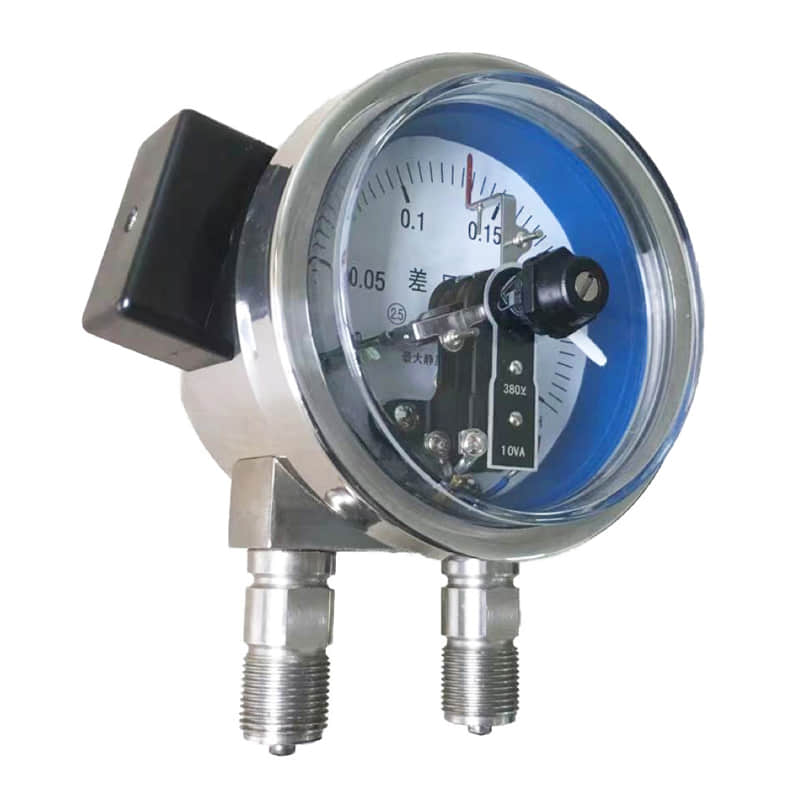
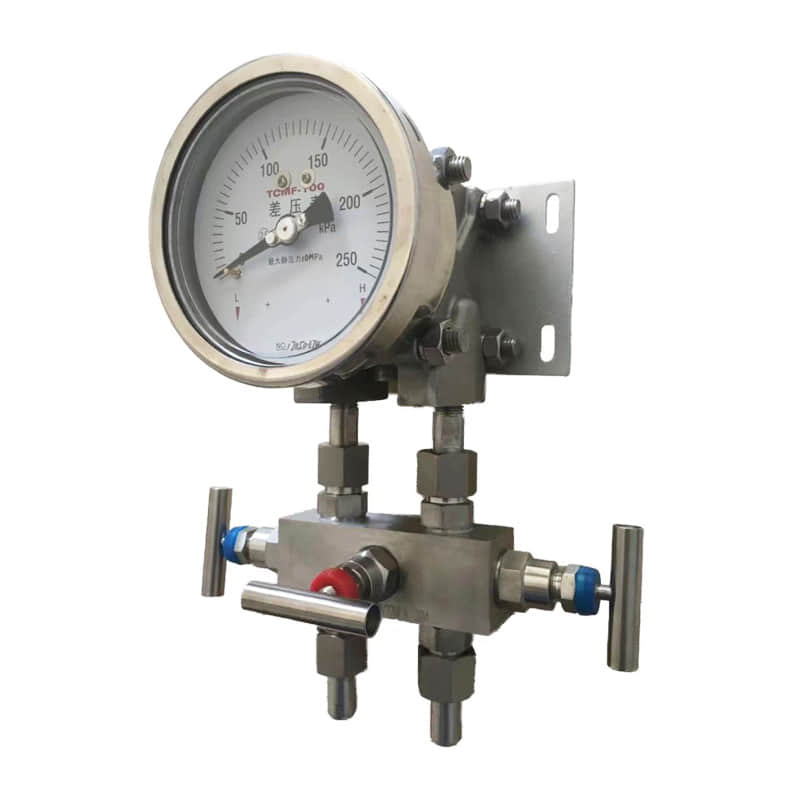
Our differential pressure gauge is engineered to provide accurate, reliable readings in even the most demanding environments. Its heavy-duty construction and advanced technology make it the go-to instrument for professionals who value precision and durability.
Here are some frequently asked questions about differential pressure gauge :
1: How do I select the right differential pressure gauge for my application?
To select the right differential pressure gauge, you should consider the specific parameters of your application, such as pressure range, media, temperature, accuracy, and any special requirements.
2: Can a differential pressure gauge be repaired or recalibrated if it becomes damaged or inaccurate?
Depending on the extent of the damage or inaccuracy, a differential pressure gauge may be able to be repaired or recalibrated by a professional. It is important to follow the manufacturer’s recommendations for maintenance and servicing.
3: What is the difference between a fixed and adjustable differential pressure gauge?
A fixed differential pressure gauge has a set pressure range and cannot be adjusted, while an adjustable gauge can be adjusted to measure different pressures within a certain range.
4: What is the purpose of a pressure release valve or bleeder valve on a differential pressure gauge?
A pressure release or bleeder valve is used to release excess pressure from the system, which can help maintain accuracy and protect the gauge from damage.
5: How can I ensure the accuracy and reliability of my differential pressure gauge readings?
Regular calibration, proper installation and maintenance, and use of appropriate accessories (e.g. snubbers, protectors, seals) can help ensure accurate and reliable differential pressure gauge readings.
6: Can a differential pressure gauge be used for more than one application?
Depending on the specific gauge and application, a differential pressure gauge may be suitable for multiple uses. It is important to consult the manufacturer’s recommendations and specifications.

7: What is a bellows and how is it related to differential pressure gauges?
A bellows is a type of flexible, corrugated metallic or non-metallic structure that is often used as an elastic element in some differential pressure gauges.
8: Can a differential pressure gauge be used for on/off control of a system?
Some differential pressure gauges may have a switch or alarm function that can be used for on/off control, but they are not typically used for this purpose. A different type of pressure control device, such as a pressure switch, would be more suitable.
9: What is a fill fluid and why is it used in some differential pressure gauges?
A fill fluid is a liquid or gas that is used to transmit pressure from the process media to the gauge mechanism. It may be necessary in certain applications where the process fluid would damage or freeze in the gauge.
10: Can a differential pressure gauge be used for air pressure testing?
Yes, a differential pressure gauge can be used for air pressure testing, but it is important to select a gauge with appropriate pressure range and accuracy for the specific test.
11: What is a back connection versus a lower connection for a differential pressure gauge?
A back connection refers to the location of the inlet and outlet connections on the back of the gauge, while a lower connection has the connections on the lower portion of the gauge. The choice between these two options depends on the specific installation and space limitations.