
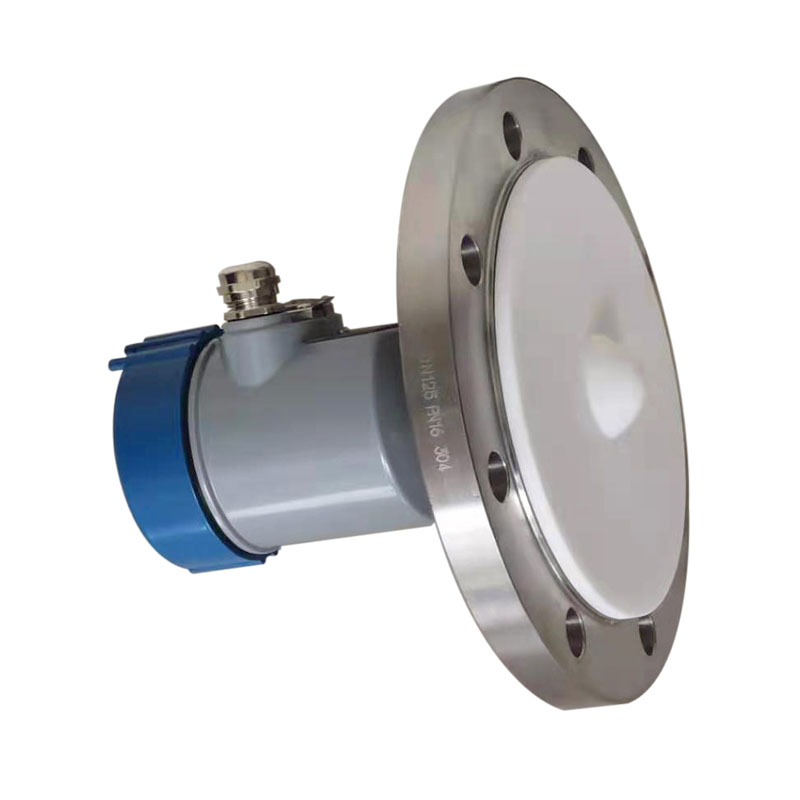
The article ‘Level Instrument Performance Under Extreme Pressure and Cryogenic Conditions’ explores the critical role of level measurement in demanding industrial settings, such as LNG storage tanks and high-pressure chemical reactors. It highlights the challenges posed by extreme conditions, including material brittleness, thermal stress, seal integrity, and signal degradation. The article discusses various level measurement technologies, focusing on radar level meters and magnetic level indicators as the most reliable for these environments. Radar meters offer non-contact operation and advanced echo processing, while magnetic level indicators provide mechanical robustness and visual indication. Ultrasonic meters have limitations in cryogenic service. The article also covers materials and construction, emphasizing the use of stainless steel, Inconel, and specialized seals. Electronics and signal processing are critical for accuracy, with features like temperature compensation and digital filtering. Case studies demonstrate real-world applications: one in an LNG storage tank using Hongguang radar level meters, and another in a high-pressure reactor using a magnetic level indicator. Selection criteria are summarized in a table, and installation and maintenance best practices are provided. The article underscores the expertise of Jiangsu Hongguang Instrument Factory Co., Ltd., a state-owned enterprise founded in 1972, which offers SIL-certified level products and adheres to ISO 9001, ISO 14001, and ISO 45001 standards. The conclusion emphasizes the importance of choosing proven technology to ensure safety and efficiency in extreme operations.
In industrial processes, level measurement is a critical parameter that ensures operational safety, efficiency, and product quality. However, when applications involve extreme pressure and cryogenic conditions, standard level instruments often struggle to maintain accuracy and reliability. This article explores the challenges, technological solutions, and performance characteristics of level instruments designed for these demanding environments. We will also highlight the expertise of Jiangsu Hongguang Instrument Factory Co., Ltd., a leading manufacturer with decades of experience in producing robust instrumentation for such challenging scenarios.
Understanding Extreme Conditions: Pressure and Cryogenics
Extreme pressure environments are typically defined as those exceeding 10,000 psi (approximately 69 MPa) or falling into high-pressure process categories in industries like oil and gas, chemical, and power generation. Cryogenic conditions, on the other hand, involve temperatures below -150°C (-238°F), often seen in liquefied natural gas (LNG) storage, liquid hydrogen systems, and aerospace applications. These conditions impose severe stresses on materials, electronics, and sensor components.

For level instruments, the combination of high pressure and cryogenic temperatures introduces unique challenges: material brittleness, thermal expansion mismatches, seal integrity, and electronic performance degradation. Instruments must be designed with specialized materials such as stainless steel, Inconel, or Monel, and employ advanced signal processing to maintain accuracy.
The Role of Level Instruments in Extreme Processes
Level measurement in extreme conditions is vital for applications like LNG storage tanks, high-pressure chemical reactors, and cryogenic transport vessels. Accurate level data ensures that tanks are not overfilled, prevents pressure build-up, and manages process flow. A failure in level measurement can lead to catastrophic events, environmental hazards, or costly downtime.
Radar level meters, magnetic level indicators, and ultrasonic level meters are commonly used, but their performance varies significantly under extreme conditions. Understanding their strengths and limitations is essential for selecting the right technology.
Radar Level Meters: The Workhorse for High-Pressure Cryogenic Tanks
Radar level meters, especially frequency-modulated continuous wave (FMCW) types, have become the preferred choice for many extreme applications. They operate by emitting microwave signals and measuring the time of flight to the process surface. The non-contact nature of radar eliminates issues related to material compatibility and pressure ratings of wetted parts.
Jiangsu Hongguang Instrument Factory Co., Ltd. offers advanced radar level meters designed to measure liquid levels in storage tanks for water, oil, and chemical liquids, as well as material levels in powder and grain silos. These instruments are engineered with robust antenna systems and high-temperature/pressure-resistant seals. For cryogenic services, specialized horn or parabolic antennas with extended nozzles are used to ensure the electronics remain at safe temperatures.
The performance of radar level meters under extreme pressure is influenced by the dielectric constant of the media, the reflection strength, and the antenna design. In LNG applications, the liquid surface is highly turbulent, causing signal scattering; modern radar units employ sophisticated echo processing algorithms to filter noise and lock onto the true level. Hongguang’s radar level transmitters incorporate features like multiple echo tracking and advanced diagnostics to maintain reliable performance even in the presence of internal tank obstructions.
Magnetic Level Indicators: Robust and Visual Monitoring
Magnetic level indicators (MLIs) are another key technology for extreme conditions. They consist of a vertically mounted chamber with a float containing a permanent magnet. As the float moves, it engages magnetic flags or a magnetic follower that indicates the level visually. MLIs are highly reliable because they are entirely mechanical in the chamber, with no electrical components exposed to the process.
For high-pressure cryogenic applications, MLIs are often constructed from forged steel or stainless steel with welded unions to withstand extreme pressures. The float must be designed to handle the density of the condensed media and the effects of temperature on magnetic strength. Hongguang Instrument provides MLIs that can be configured with level transmitters to output analog current signals, or with hold-type and non-hold type switches for level control and alarm functions.
One significant advantage of MLIs is that they provide visual indication even during power outages, ensuring operators can always monitor the level. In cryogenic storage, the chamber can be jacketed or vacuum-insulated to minimize heat leak, and the indicator head can be color-coded for clear readability.
Ultrasonic Level Meters: Challenges in Cryogenic Environments
Ultrasonic level meters use sound waves to determine level; they are non-contact and suitable for many liquids and solids. However, in cryogenic environments, the speed of sound in the vapor space changes dramatically with temperature, and the condensation of moisture on the transducer can severely attenuate the signal. Therefore, ultrasonic meters are rarely used for low-temperature cryogenic liquids unless special heated transducers or stilling wells are deployed.
Nevertheless, ultrasonic level meters have their place in extreme pressure applications where vapors are not too dense. Hongguang Instrument’s ultrasonic level meters are certified with SIL (Safety Integrity Level) for use in safety-critical systems. They are often used in secondary containment tanks or process vessels where the media is not truly cryogenic but still under high pressure.
For cryogenic service, some manufacturers incorporate ultrasonic level meters with piezoelectric crystals designed for low temperatures and specially formulated silicone rubber seals. But the industry trend is toward radar and MLIs for primary level sensing in LNG and liquid hydrogen applications.

Materials and Construction for Extreme Environments
Instruments must be constructed with materials that retain their mechanical properties at cryogenic temperatures. Austenitic stainless steels (e.g., 304L, 316L) are common, but for higher strength, materials like 304LN or 321 are used. Inconel and Monel are selected for severe conditions involving high pressure combined with corrosion. The pressure rating of wetted parts often follows ASME B16.34 or similar standards, ensuring safe operation.
Hongguang Instrument Factory, as a state-owned enterprise with roots dating back to 1972, uses precision machining and welding processes to ensure structural integrity. Their products undergo rigorous testing to meet international standards, including ISO 9001:2015, ISO 14001:2015, and ISO 45001:2018 certifications. These certifications reflect a commitment to quality, environmental management, and occupational health and safety.
The sealing system is a critical area: O-rings and gaskets must be selected to avoid hardening and cracking at low temperatures. PTFE, PFA, and specially compounded elastomers are often used. For extremely high pressures, metal-to-metal seals or lens gaskets are employed. The entire instrument body may also be jacketed or purged with dry nitrogen to prevent ice formation.
Electronics and Signal Processing: Maintaining Accuracy
The electronics of level instruments are typically housed in an enclosure that may be remote-mounted via a breather tube or cable. In cryogenic tanks, the electronics head is often extended above the tank with a thermal standoff to dissipate heat. For high-pressure service, the enclosure must also be rated to withstand potential process leaks; depending on the hazardous area classification, explosion-proof or intrinsically safe enclosures are required.
Advanced signal processing algorithms are essential to differentiate the true level echo from false echoes caused by tank structures, turbulence, or foam. Hongguang’s radar and ultrasonic level transmitters utilize microprocessors with digital filtering and temperature compensation. For cryogenic media, the dielectric constant can vary, and the instrument can be configured with the exact media properties to ensure accurate measurement.
Multi-variable differential pressure flow transmitters are also used for level measurement in some scenarios. They can be used with throttling elements like V-cones or orifice plates to compute flow rate; but for level, differential pressure (DP) transmitters measure hydrostatic head. However, at cryogenic temperatures, the liquid density changes significantly with temperature, so a DP transmitter must be paired with a temperature sensor and a density compensation calculation. Hongguang offers multi-variable transmitters that can handle such complexities, delivering direct instantaneous level or flow values in units like M3, Ton, or MMSCFD.
Case Study: LNG Storage Tank Level Monitoring
Liquefied natural gas (LNG) is stored at around -162°C and at pressures slightly above atmospheric. The storage tanks are typically large, with intricate internal structures. Two independent level instruments are often required for safety: a primary radar and a secondary; in Europe, typically a servo gauge or radar. The radar level meter must operate reliably in the saturated vapor atmosphere, where the gas composition is almost pure methane.
One major LNG storage facility in China, which supplies to the state grid, adopted radar level meters from Hongguang Instrument. The radar units, equipped with PTFE-sealed horn antennas, were installed in the tank top penetration nozzles. An extensive testing program validated the performance: accuracy within ±3 mm over a 30-meter range, and zero drift over an 18-month period. The pressure inside the tank was around 150 kPa, well within the instrument’s rating, but the cryogenic conditions caused ice formation at the antenna tip; the automatic de-icing feature, which periodically heats the antenna, prevented signal degradation.
For maintenance, the design allowed retirement of the radar without depressurizing the tank, thanks to an isolation valve system. This saved significant downtime and showcased the robustness of the instruments.
Case Study: High-Pressure Chemical Reactor Level Measurement
In a petrochemical complex, a high-pressure reactor operating at 25 MPa and 300°C required accurate level control to prevent exothermic runaway. The process media was a corrosive slurry. Traditional sight glasses failed quickly, and float switches were damaged by the harsh conditions.
The engineering team selected a magnetic level indicator from Hongguang Instrument, fabricated from 316L stainless steel with a titanium internal float. The float was a 316L cylinder with welded end caps, designed to withstand the pressure and buoyancy requirements. The indicator chamber was flanged to the reactor’s side nozzles, and the magnetic flags were made of high-temperature-stable plastic. A level transmitter, using a Hall-effect sensor, was attached to the indicator to provide a 4-20 mA output for the control system.
The MLI operated continuously for two years without any failure. The instrument’s simple mechanical principle ensured no electronic components were exposed to the extreme pressure/temperature. The visual indicator also allowed operators to verify the process level immediately, enhancing confidence.
Selecting the Right Level Instrument for Cryogenic and High-Pressure Service
Selection criteria include process temperature, pressure, media properties (density, dielectric, viscosity), tank geometry (nozzles, internal obstructions), required accuracy, safety integrity level (SIL) requirements, and maintenance capabilities. The following table summarizes the suitability of various level technologies for extreme conditions:
| Technology | High Pressure | Cryogenic | Relative Cost |
|---|---|---|---|
| Radar (FMCW) | Excellent (up to 10k psi) | Excellent with antenna modifications | High |
| Magnetic Level Indicator | Excellent (up to 15k psi) | Good with insulated chamber | Medium |
| Ultrasonic | Fair (needs high power) | Poor (signal attenuation) | Medium |
| Differential Pressure | Good (but density compensation needed) | Fair | Medium |
For safety-instrumented functions, SIL certification is often required. Hongguang Instrument offers a range of SIL-certified level products, including ultrasonic level meters, magnetic level indicators, and radar level meters, with certification from Ente Certificazione Macchine (ECM). These products meet the rigorous reliability and fail-safe requirements for process safety.
Installation Best Practices for Extreme Conditions
Proper installation is as important as instrument selection. The following guidelines are recommended for cryogenic and high-pressure services:
- Use adequate thermal standoff for radar electronics to avoid overheating.
- Position the instrument to minimize turbulence and foam effects.
- For MLIs, ensure the chamber is completely filled and vented to allow proper float movement.
- Provide isolation valves for maintenance without process shutdown.
- Consider using stilling wells for radar in agitated vessels.
- Heat tracing or insulation jacket for cryogenic applications to prevent ice formation.
Jiangsu Hongguang Instrument Factory provides comprehensive technical support, including installation supervision and commissioning. With over 70% of large iron and steel enterprises in China as clients, the company has vast experience in challenging field conditions.

Maintenance and Calibration
Even the most robust instruments require periodic calibration. In cryogenic applications, sensors should be checked against a reference when the tank is empty or during shutdown. For radar units, the echo curve can be analyzed to detect potential issues. MLIs should be inspected for magnet strength loss and float integrity. Spare parts availability is crucial; Hongguang Instrument maintains a ready inventory of wetted parts for rapid replacement.
The company’s products are designed to minimize after-service costs, with stable performance thanks to high-quality materials and manufacturing techniques. Calibration tools and software are provided to facilitate easy adjustment of zero and span in the field.
Future Trends in Extreme-Condition Level Measurement
Advancements in non-contact radar technology, such as Terahertz or millimeter-wave radar, promise even better performance in tight nozzles and harsh environments. Wireless transmitters are becoming more common, enabling easy installation without cabling. Additionally, the Internet of Things (IoT) allows remote monitoring and diagnostics, which is ideal for inaccessible extreme installations.
Hongguang Instrument is actively developing smart sensors with embedded diagnostics, predicted maintenance alerts, and improved user interfaces. The company’s affiliation with SUYI Group, a major supplier to industries like CNPC, SINOPEC, and GD Power Development Co., ensures its research is aligned with market needs.
Conclusion
Level instruments operating under extreme pressure and cryogenic conditions face unique challenges that require specialized design and robust construction. Radar level meters and magnetic level indicators have proven to be the most reliable technologies in these settings. Jiangsu Hongguang Instrument Factory Co., Ltd., with its long history since 1972, provides high-quality solutions that meet stringent international standards. Their level instruments have been widely adopted in the petroleum, chemical, and power industries, including SIL-certified models for safety-critical applications.
Choosing the right level instrument is a critical engineering decision. By understanding the process requirements and leveraging proven technologies, industries can achieve safe, accurate, and uninterrupted level measurement even in the harshest environments.