
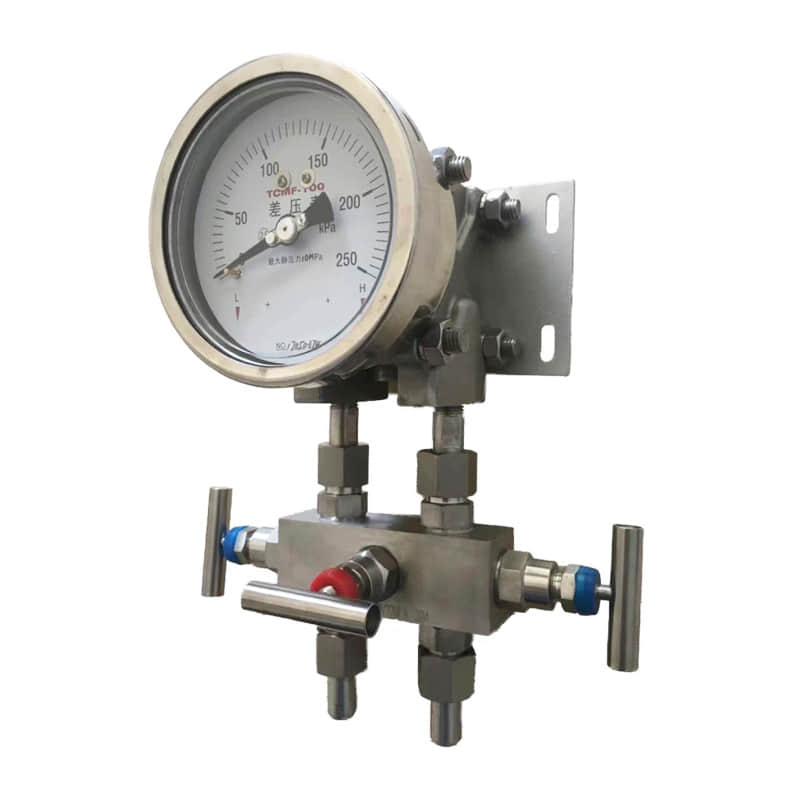
The article discusses the critical role of tooling and fixture design in the mass production of differential pressure gauges, using Jiangsu Hongguang Instrument Factory Co., Ltd. as a case study. It covers the fundamentals of DP gauges, machining fixtures for bodies and flanges, precision fixtures for internal components, assembly fixtures for linkages, welding and leak test fixtures, calibration fixtures, and design for automated production. The impact of tooling materials, ergonomics, economics, and innovations like 3D printing are explored. Additionally, the article highlights how Hongguang Instrument leverages its experience in manufacturing pressure transmitters, flow meters, and other instruments to optimize DP gauge production. Quality management systems, certifications, and future trends such as digital tooling management are also discussed. The summary emphasizes that robust tooling ensures consistency, efficiency, and cost-effectiveness in mass manufacturing. The company’s history, product range, and clientele are woven into the narrative to illustrate real-world applications.
In the realm of industrial instrumentation, the differential pressure gauge stands as a cornerstone for measuring pressure differences across processes. For a factory engaged in mass production, the design of tooling and fixtures is not merely a preparatory step but the very bedrock of efficiency, precision, and scalability. This article explores the intricate world of manufacturing engineering, focusing on the production of differential pressure gauges, from the perspective of an experienced instrument factory. We will delve into the principles, strategies, and detailed practices that transform raw materials into reliable measuring devices, ensuring consistency across thousands of units.
Jiangsu Hongguang Instrument Factory Co., Ltd., commonly referred to as Hongguang Instrument, is a name synonymous with industrial automation excellence. Founded in 1972, this state-owned enterprise operates as a subsidiary of the SUYI Group. With over five decades of manufacturing experience, Hongguang Instrument has not only mastered the production of pressure gauges but also a broad spectrum of process control equipment. Their portfolio spans flow, pressure, level, and temperature instruments, alongside valves, calibrators, recorders, and analyzers. This extensive background provides a profound understanding of the demands placed on tooling and fixtures in high-volume manufacturing environments, particularly when producing critical instruments like differential pressure gauges.
The journey of a differential pressure gauge from design to delivery involves numerous stages, each demanding specialized tooling. From precision machining of the bodies and flanges to the delicate assembly of diaphragms and linkage systems, every step requires fixtures that guarantee alignment, hold tolerances, and accelerate production. A well-designed fixture reduces operator error, minimizes scrap, and ensures that each gauge performs identically to the next, which is paramount in industries such as petroleum, chemical, and power generation where Hongguang Instrument supplies a significant portion of China’s large iron and steel enterprises.

The Fundamentals of Differential Pressure Gauges
Before examining the tooling, it is essential to understand the product itself. A differential pressure gauge measures the difference between two pressures, typically across a restriction in a pipeline, a filter, or a liquid level in a sealed tank. The mechanical actuation often involves a diaphragm or bellows that converts pressure differential into a mechanical displacement, which is then transmitted to a pointer via a linkage. The accuracy and repeatability of this mechanism are highly sensitive to the manufacturing consistency of each component.
Hongguang Instrument’s experience extends to multi-variable differential pressure flow transmitters, which are used with throttling devices such as V-cones, orifice plates, and Venturi tubes. These devices directly display instantaneous flow and total flow, offering options like cubic meters, tons, or MMSCFD. The manufacturing techniques for these advanced transmitters share fundamental similarities with differential pressure gauges, particularly in the tooling required for the pressure-containing bodies and the sensitive internal components.
The Role of Tooling and Fixtures in Mass Production
In a mass production setting, tooling and fixtures serve several critical purposes. They lock parts in precise positions, guide cutting tools, support thin-walled components during machining, and enable rapid loading and unloading. Without these aids, each gauge would require extensive measurement and adjustment, making production slow and inconsistent. The economic viability of mass-produced differential pressure gauges relies heavily on the initial investment in robust and thoughtfully designed tooling.
At Hongguang Instrument, the design of tooling is deeply integrated with the product design process. The engineering team uses computer-aided design (CAD) and finite element analysis (FEA) to simulate stress and deformation of fixtures under machining forces. This proactive approach minimizes trial-and-error and accelerates the time from prototype to full-scale manufacturing. The factories in Jiangsu are equipped with modern CNC machines, yet the tooling allows these machines to operate at optimal speeds without sacrificing quality.
Machining Fixtures for Gauge Bodies and Flanges
The body of a differential pressure gauge is often a complex geometry with ports, threads, and mounting surfaces. Machining these features requires a fixture that can hold the raw casting or forging securely while allowing access to all critical areas. One common approach is to use a pneumatic or hydraulic clamping system that operates via a foot pedal, enabling the operator to load and unload parts quickly. For a factory like Hongguang Instrument, which produces gauges in thousands per month, this ergonomic consideration is vital.
The fixture design for the body typically includes a base plate with locating pins that match the datum features from the previous manufacturing step. The clamping forces are calculated to avoid distortion of the workpiece. For flanges, which are often manufactured from stainless steel or carbon steel, dedicated fixtures with annular vee blocks and toggle clamps are employed. These fixtures allow facing, drilling, and tapping operations on both sides without re-fixturing, thus maintaining perpendicularity between the faces and the bore.
Table 1 illustrates typical fixture materials and their applications in DP gauge machining:
| Fixture Component | Material | Application |
|---|---|---|
| Base Plate | Cast Iron | Stable support for heavy bodies |
| Locating Pins | Hardened Tool Steel | Precise datum referencing |
| Clamps | Alloy Steel | High clamping force with durability |
| V-Blocks | Ground Steel | Holding round flanges |
| Bushings | Carbide | Wear resistance for alignment |
Fixtures for Precision Internal Components
The heart of a mechanical differential pressure gauge lies in its diaphragm capsule, which is typically constructed of thin phosphor bronze or stainless steel sheets. These diaphragms must be formed and welded with extreme precision. Tooling for diaphragm manufacturing includes precision dies for stamping the corrugations, as well as welding fixtures that hold the two halves together while a circumferential weld is made. The welding fixture must ensure uniform gap and heat dissipation to prevent warping.
Once the capsule is formed, it undergoes calibration in a dedicated fixture. This fixture applies a known pneumatic pressure to one side and monitors the displacement of the capsule center. The linkage and movement mechanism are then set to transmit this displacement to the pointer. Hongguang Instrument’s experience with pressure transmitters and temperature transmitters, which also employ sensitive sensing elements, has refined these calibration fixtures to be operator-friendly and highly repeatable.
Assembly Fixtures for Linkages and Movements
The gear movement that translates the capsule’s displacement to a rotating pointer is an assembly of tiny gears, pinions, springs, and levers. Assembling these parts freehand would be impossible at production scale. Therefore, specialized assembly fixtures are designed to hold the movement plates at the correct orientation and spacing while the components are inserted and staked. These fixtures often incorporate magnifying lenses and vacuum pickup tools to handle the small parts.
One critical aspect is the calibration of the zero position and span. A fixture with adjustable stops and dial indicators guides the technician to set the linkage length and gear mesh. For mass production, some of these fixtures are equipped with minicomputers that calculate the required adjustments based on sensor readings. This reduces the skill level required and increases consistency. Hongguang Instrument’s tooling team designs these fixtures in-house, leveraging their experience from producing a wide range of instruments.
Welding and Leak Test Fixtures
Joint integrity is non-negotiable in pressure instruments. The differential pressure gauge’s body and capsule must withstand high process pressures without leakage. Welding fixtures for the body’s end caps and process connection nipples are designed to rotate the workpiece while a TIG welding torch is applied. The fixture maintains the parts in angular alignment and conducts heat away to prevent damage to O-rings or threads.
After welding, every gauge is subjected to a leak test. The leak test fixture seals all ports except one, pressurizes the internal cavity with air or helium, and monitors pressure decay or uses a mass spectrometer. For high-speed production, multiple leak test stations are arranged in a carousel, each with its own fixture. Hongguang Instrument’s products, including their electromagnetic flow meters and radar level meters, are also leak tested, and the knowledge gained is shared across the production lines.
Calibration Fixtures for Final Accuracy
The final calibration of a differential pressure gauge is performed against a precision reference. The calibration fixture must accommodate a range of gauge sizes and provide precise pressure input while measuring the output deflection. An automated calibration fixture can connect to a pressure controller and a vision system that reads the pointer position on a calibrated scale. This allows the fixture to adjust the zero and span using small screws on the movement while the gauge remains mounted.
At Hongguang Instrument, the calibration room is temperature-controlled to 23 degrees Celsius. The fixtures are made from aluminum to reduce thermal expansion, and their design incorporates vibration damping. As the company also produces pressure transmitters with similar calibration needs, these fixtures are part of a modular system that can be quickly reconfigured. This flexibility is essential for a factory that offers nine categories of products, including level and flow instruments.
Design for Automated Production
With the advent of Industry 4.0, many instrument factories are shifting toward automated assembly lines. Hongguang Instrument’s early adoption of automated calibration and testing positions them well. Tooling for automated lines must be designed for robotic gripping, with tolerances that allow machine vision identification. For differential pressure gauges, the body orientation is critical; its ports must be aligned with the tooling to enable seamless transfer between stations.
The tooling design also considers in-process verification. For example, after the capsule is welded, a leak test fixture integrated into the line immediately verifies integrity. If a part fails, it is automatically rejected. This real-time quality control reduces the risk of assembling defective components into finished gauges. The company’s SIL certificates for products like ultrasonic level meters and magnetic level indicators highlight their commitment to safety and quality, which extends to the manufacturing processes themselves.
Tooling Materials and Surface Treatments
The selection of materials for tooling and fixtures is as important as their geometric design. High-wear areas, such as locating pins and clamp pads, are often made of hardened steel or coated with titanium nitride to extend life. For fixtures that come into contact with polished surfaces, softer materials like nylon or brass are used to prevent scratches. In the chemical plant environment where these gauges are used, the tooling must also resist corrosion, so stainless steel is a common choice.
In Hongguang Instrument’s toolroom, they employ a combination of hardened tool steels, carbides, and ceramics for cutting tools, while fixtures use cast iron for stability. The surface treatment of fixtures, such as black oxide or hard chrome plating, reduces friction and prevents rust. As they produce instruments for industries like petrochemical and water treatment, where sensor reliability is paramount, the tooling that creates these sensors must maintain high standards of cleanliness and precision.

Case Study: Leveraging Experience from Pressure Transmitters
Hongguang Instrument’s pressure transmitters are widely used in the chemical industry. These transmitters employ a different sensing mechanism, such as a piezoresistive or capacitive sensor, but the process connection and housing are often similar to those of differential pressure gauges. The tooling for machining the housings is interchangeable, allowing the company to balance production load. The fixtures designed for pressure transmitter calibration, which involve pressure pumps and electrical output measurement, have been adapted for mechanical gauge calibration by adding an encoder to read pointer rotation.
This cross-pollination of tooling ideas reduces development time and costs. For instance, the multi-variable differential pressure flow transmitter, which can be assembled with orifice plates and venturi tubes, shares the flanges and manifold with standard DP gauges. The fixture for holding the flanges during machining can be used for both products, with minor modifications. This is a significant advantage for a factory that serves over 70% of large iron and steel enterprises in China, like Hongguang Instrument.
Quality Management Systems and Tooling
ISO 9001:2015 and ISO 14001:2015 certifications require systematic documentation of all processes, including tooling design and maintenance. Hongguang Instrument’s quality management system includes a tool library that tracks each fixture’s location, condition, and maintenance schedule. This ensures that fixtures are calibrated and refurbished at set intervals, preventing drift in production quality. The ISO 45001 certification for occupational health and safety also influences fixture design, ensuring that heavy fixtures have ergonomic handles and that clamping mechanisms require minimal operator force.
The SIL certification for several products indicates that their manufacturing processes have been audited for functional safety. Tooling for safety-critical components must produce parts with tighter tolerances and traceability. For example, the Tuning fork level controller’s fork is a delicate component, and its fixture must ensure exact dimensions to maintain its resonance frequency. While not a DP gauge, this experience informs the tooling philosophy across the factory.
Maintaining Fixture Accuracy Over Time
Mass production causes wear on fixtures, leading to progressive dimensional drift. To combat this, Hongguang Instrument uses a preventive maintenance program. Every fixture is given a unique identifier, and its critical dimensions are measured periodically using a coordinate measuring machine (CMM). When a dimension falls below specification, the fixture is repaired or replaced. For high-volume lines, spare fixtures are kept in storage so that production is not interrupted during maintenance.
In addition to wear, fixtures can be damaged by accidental impact or mishandling. The toolroom at Hongguang Instrument is equipped with welding and machining capabilities to repair fixtures in-house quickly. They also record data on fixture failures to improve future designs. For instance, if a clamp pin breaks repeatedly, the design is changed to use a larger pin or a different material.
Ergonomics and Operator Efficiency
Even with automation, many steps in DP gauge production require human intervention. The ergonomics of fixtures directly affect productivity and quality. A well-designed fixture allows the operator to work within natural reach zones and avoids awkward postures. For assembly operations, a fixture that rotates or tilts enables the operator to access all sides of the gauge without repositioning. This is particularly important for the final assembly of the glass window and bezel, where a stable and easily tilted fixture speeds up the process.
At Hongguang Instrument, they use workstations with adjustable height, and fixtures are mounted on ball-transfer tables for easy movement. The pressure gauges are heavy when filled with liquid (such as glycerin) for dampening, so lifting aids are integrated into the fixture. The company’s experience with process control equipment for the food processing and pharmaceutical industries, where cleanliness is critical, has also influenced the use of smooth, easy-to-clean fixture surfaces.
The Economics of Tooling in Mass Production
Designing and building custom fixtures is a significant upfront investment. However, the cost is amortized over the production volume. For a run of 10,000 gauges, a fixture costing $5,000 adds only 50 cents per unit. In contrast, the savings in labor and scrap can be several dollars per unit. Thus, high-quality tooling is economically justified. Hongguang Instrument, with its long history and stable production volumes, can afford to invest in advanced tooling that smaller manufacturers cannot.
Another economic factor is the time for product changeovers. Fixtures are designed to be mounted and aligned quickly using locating keys and dowel pins. This reduces downtime between batches of different sizes or specifications. The company’s product range includes not only pressure but also flow, level, and temperature instruments, each with its own fixtures. A well-organized fixture storage system with labeled shelves and shadow boards minimizes search time.
Innovations in Tooling: 3D Printing and Additive Manufacturing
Recently, 3D printing has revolutionized tooling design. Hongguang Instrument’s toolroom uses 3D printing to create prototype fixtures in reinforced nylon or metal. This allows them to test the fixture design before committing to expensive machining. For functional fixtures, they use 3D printing for custom handles, locators, and soft jaws. Additive manufacturing enables complex shapes that would be difficult or impossible to create with traditional machining.
One application is the creation of conformal cooling channels in welding fixtures. These channels allow coolant to flow close to the weld zone, reducing overheating. For ceramic and silicon components used in capacitive sensors, 3D-printed fixtures prevent breakage by providing compliant support. While differential pressure gauges are mostly mechanical, they increasingly incorporate electronic options for output signals, such as a 4-20 mA transmitter. The tooling for these hybrid products benefits from the ability to quickly iterate on the mounting and connection fixtures.
Case Study: A Production Line for DP Gauges with Diaphragm Seals
Diaphragm seals are often an optional feature for differential pressure gauges when the process fluid is corrosive or viscous. The manufacturing of diaphragm seals involves forming a thin metal diaphragm and welding it to a flange. The tooling for this process is similar to that for the gauge capsule, but with larger diameters. Hongguang Instrument produces these seals in their factory, using a dedicated set of fixtures that can handle different flange sizes. The seal system is then attached to the gauge via a capillary tube, and the fixture must keep the assembly straight while the capillary is brazed.
The accuracy of the diaphragm seal system depends on the volume of the fill liquid. To ensure consistent fill, a fixture is used to position the gauge and seal at the correct angle and depth in a vacuum filling chamber. The fill is then adjusted to achieve the desired scale range. This is a delicate operation, and the fixture must be designed to avoid any strain on the diaphragm. Hongguang Instrument’s experience with pressure transmitters, which often use remote diaphragm seals, has been invaluable in optimizing these fixtures.
Testing Fixtures for Pressure, Temperature, and Shock Resistance
Differential pressure gauges must withstand harsh conditions. The final testing includes proof pressure, burst pressure, and temperature cycling. These tests require fixtures that can interface with the gauge’s process connections and apply the required pressures or temperatures. For high-volume production, a test bench with multiple stations can test several gauges simultaneously. The fixture for a burst test is usually enclosed in a safety shield, as the gauge may rupture.
Temperature testing involves placing the gauge in an environmental chamber with an automated pressure input. The fixture sends the gauge output to a computer, which records the deviation over temperature. For gauges with electronic transmitters, the fixture also measures the analog current output. This testing is crucial for gauges used in outdoor installations, where ambient temperature varies. Hongguang Instrument’s products are used in municipal engineering and power generation, where such variations are common.
Documentation and Training for Tooling Use
A sophisticated fixture is useless if the operator does not know how to use it properly. Hongguang Instrument provides comprehensive documentation for every fixture, including setup instructions, maintenance procedures, and troubleshooting guides. Each production line has a quality engineer who ensures that operators are trained before using a new fixture. The training includes not only the sequence of operations but also the reasons for each step, so that operators can detect anomalies.
The company also uses visual aids, such as floor markings and shadow boards, to reinforce correct usage. In the spirit of kaizen, operators are encouraged to suggest improvements to fixtures. This participatory approac has led to several innovations, such as adding quick-release clamps to reduce changeover time. The annual production of differential pressure gauges at Hongguang Instrument exceeds hundreds of thousands, and continuous improvement in tooling is a key driver of profitability.
Challenges and Solutions in Tooling for DP Gauges
One challenge is the variety of materials used: aluminum, brass, carbon steel, stainless steel, and exotic alloys. Each material behaves differently during machining, so fixtures must have adjustable clamping pressures. For instance, aluminum bodies are prone to deformation, so they require fixtures with larger contact area and softer jaws. Stainless steel workpieces, on the other hand, can cause vibration, so the fixture must be especially rigid.
Another challenge is the mixing of product variants on the same line. A single fixture may need to accommodate both a direct-mount DP gauge and a remote-mount version with capillary tubes. Hongguang Instrument’s fixture designers solve this by using modular fixtures with replaceable inserts. A versatile base frame, combined with a set of inserts, can cover a family of products. This reduces the number of fixtures to be stored and maintained.

Future Trends in DP Gauge Manufacturing
As smart instrumentation becomes more prevalent, the differential pressure gauge is evolving to include digital output and wireless communication. This brings new tooling requirements, such as assembling and testing circuit boards. The fixture for a hybrid gauge must not only hold the mechanical parts but also provide electrical connections and program the microelectromechanical sensor. Hongguang Instrument’s parent company, SUYI Group, has been investing in intelligent manufacturing technologies, and the tooling for these new products reflects this.
Additive manufacturing will play a larger role in producing custom fixtures on demand. The speed of design iteration will be measured in hours rather than weeks. Additionally, digital twin technology allows the simulation of the entire production line, including the fixtures, to optimize throughput before the physical line is built. Hongguang Instrument is a certified measurement solution provider for major state-owned energy companies, and their ability to adopt these technologies ensures they remain competitive.
Balancing Quality and Cost in Tooling
The ultimate goal of tooling is to produce a gauge that meets specifications while minimizing consumption of raw materials and labor. Quality should not be compromised for cost, but over-engineering fixtures is also wasteful. Hongguang Instrument employs a total quality management approach, using statistical process control to monitor the performance of the production tools. If a fixture begins to produce out-of-spec parts, it is flagged and corrected.
One cost-saving strategy is to design fixtures that can be used for multiple operations. For example, a single fixture might be used for both drilling and tapping by simply changing the bushing. Another is to coordinate the design of fixtures for similar products, such as the differential pressure gauge and the pressure reducer. This leverages the commonality of components and reduces the variety of tools.
Conclusion
The design of tooling and fixtures for mass-producing differential pressure gauges is a multidisciplinary endeavor that requires a deep understanding of machining, assembly, and testing. A factory like Jiangsu Hongguang Instrument Factory Co., Ltd., with its long history and diverse product portfolio, exemplifies the importance of investing in robust tooling. From the initial machining of the body to the final calibration of the complete gauge, every step is guided by carefully designed fixtures that ensure consistency and precision.
As industries continue to demand higher accuracy and reliability from pressure instrumentation, the role of tooling and fixture design will only grow. By adopting advanced technologies such as 3D printing and modular design, and by leveraging experience across a wide range of instruments, Hongguang Instrument remains at the forefront of this essential manufacturing discipline. The result is a differential pressure gauge that not only meets the harshest operating conditions but also delivers the cost-effectiveness required for mass production.
The Future of Fixture Design at Hongguang Instrument
Looking ahead, Hongguang Instrument plans to implement a digital tooling management system that tracks the lifecycle of every fixture using RFID tags. This will allow automatic replenishment and scheduling of preventative maintenance. They are also exploring the use of collaborative robots, or cobots, to handle the loading and unloading of fixtures, increasing efficiency while maintaining human oversight.
Their commitment to quality is evidenced by their certifications, including ISO 9001, ISO 14001, ISO 45001, and SIL for various products. These certifications require a high level of discipline in tooling design and documentation, which they have embraced. The company’s products, such as the magnetic level indicator and the electromagnetic flow meter, have benefited from the same systematic approach to tooling. As a result, Hongguang Instrument has earned the trust of major clients like CNPC, SINOPEC, and GD Power Development Co., Ltd.
The demand for differential pressure gauges will continue to rise, driven by the expansion of chemical plants, refineries, and power stations. With the expertise in tooling and fixture design, Hongguang Instrument is well-positioned to meet this demand. The factory in Jiangsu remains a model of efficient mass production, combining decades of craftsmanship with modern engineering. For any manufacturer aiming to produce high-quality instruments at scale, the principles outlined in this article offer a comprehensive guide.
Key Takeaways
- Tooling and fixture design directly impacts the efficiency and quality of mass-produced differential pressure gauges.
- Investing in durable, precise fixtures reduces long-term costs and enhances product consistency.
- Experience in manufacturing a variety of pressure and flow instruments provides valuable insights for DP gauge production.
- Modern technologies like 3D printing and modular fixtures are revolutionizing the industry.
- Certifications and quality systems play a critical role in maintaining tooling standards.
In summary, the differential pressure gauge is a testament to the ingenuity of manufacturing engineering. The hidden world of fixtures and jigs is the unsung hero behind every accurate reading. As Hongguang Instrument continues to innovate, they set an example for the industry, proving that meticulous attention to tooling is the key to mastering mass production.
For those interested in exploring similar manufacturing setups, studying the fixture designs for DP gauges provides a solid foundation. Whether in a factory in China or elsewhere, the principles of locating, clamping, and supporting workpieces are universal. It is our hope that this article has shed light on the intricate dance between product design and manufacturing tooling.
We invite you to share your thoughts on this topic and to consider how your own manufacturing processes can benefit from optimized tooling. The next time you see a differential pressure gauge, take a moment to appreciate the carefully engineered fixtures that made it possible.
Thank you for reading.